Follow Me On Social Media!
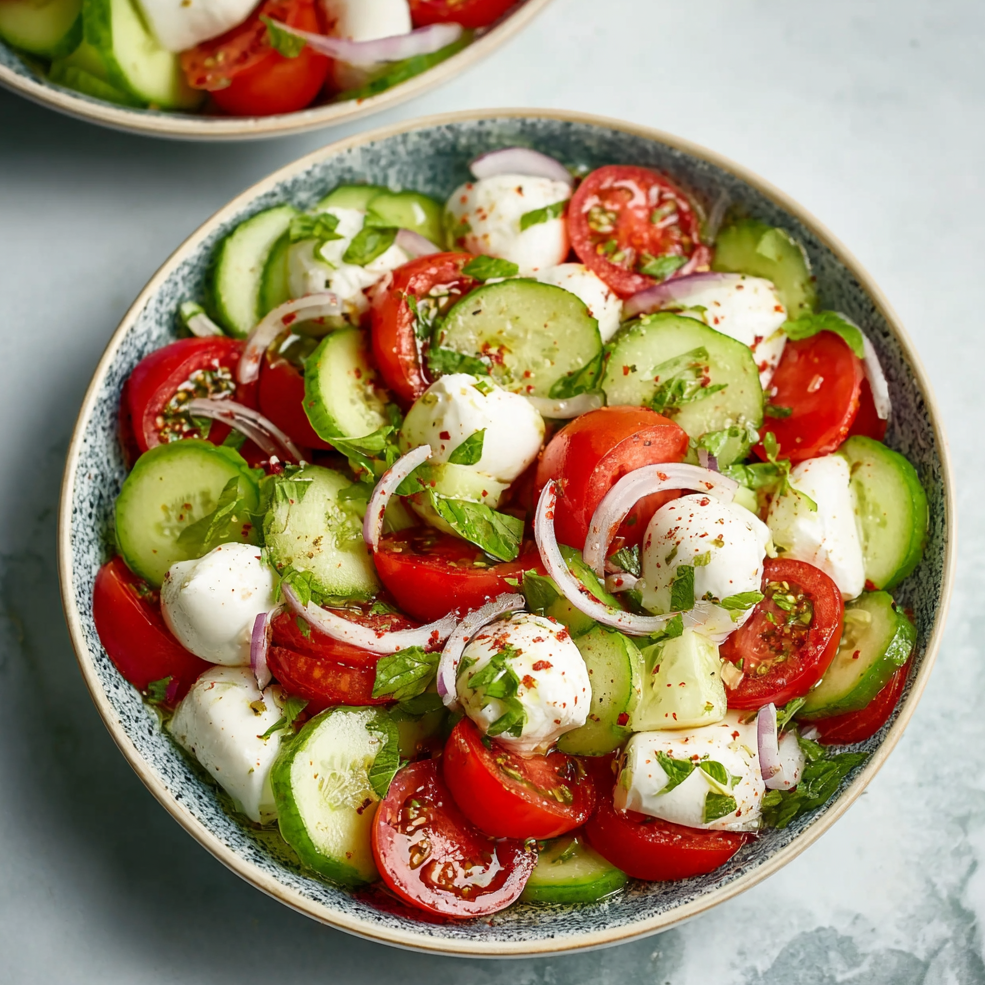
Fresh Cucumber Caprese Salad: The Hydrating Summer Twist

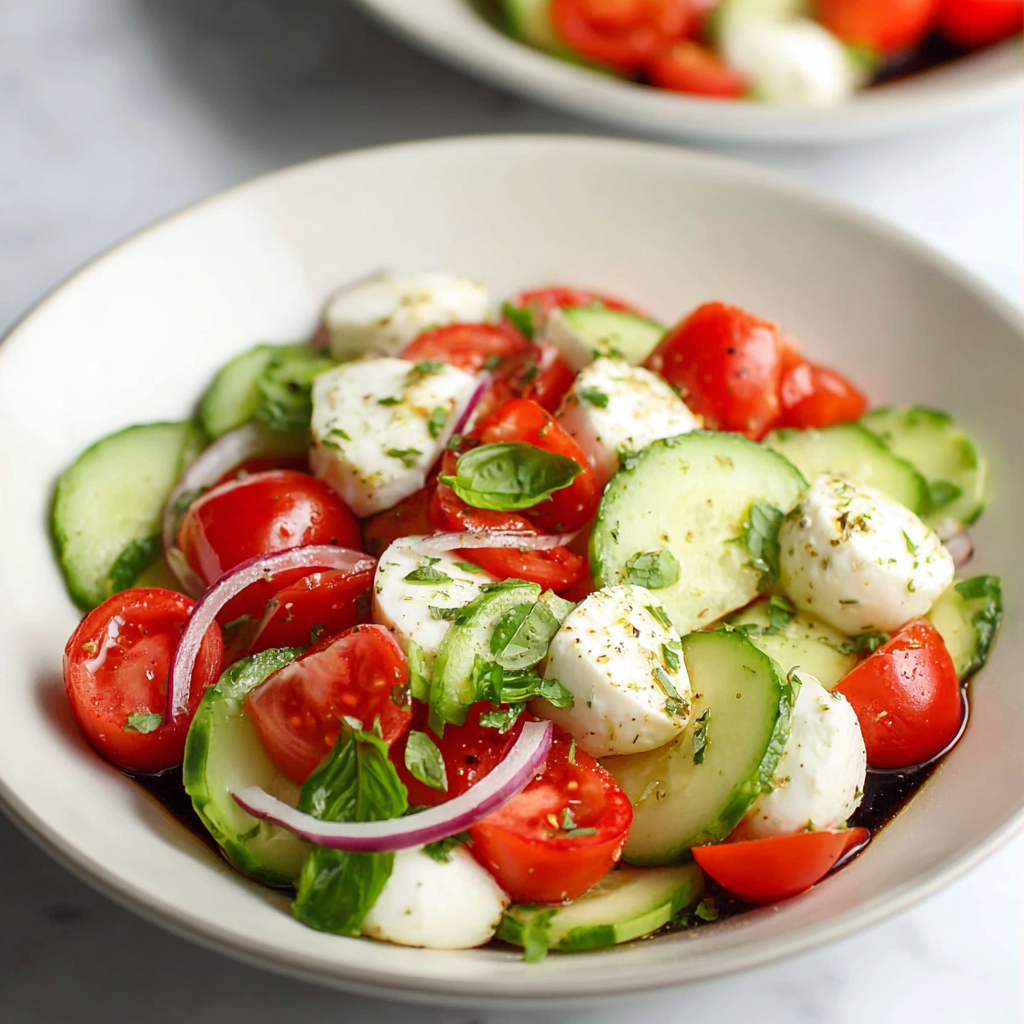
Why is Adding Cucumber to a Caprese More Than Just a “Crunch” Factor?
Did you know that cucumbers are 95% water, making them one of the most hydrating foods on the planet? While the classic Italian Insalata Caprese relies on the acidity of tomatoes and the creaminess of mozzarella, adding cucumber introduces a structural element that prevents the salad from becoming “soupy.”
Data from culinary preference surveys indicates that “texture contrast” is the #1 factor in salad satisfaction. Our Fresh Cucumber Caprese Salad provides a crisp, cooling counterpoint to the soft buffalo mozzarella. This isn’t just a side dish; it’s a strategically designed, low-calorie nutrient bomb that maximizes volume while providing the essential healthy fats needed to absorb the Lycopene found in tomatoes.
The Essential Ingredients List
To achieve the perfect balance of Mediterranean flavors, the quality of your oil and the temperature of your cheese are the two most critical variables.
- 2 Large English Cucumbers: These have thinner skins and fewer seeds, providing a more consistent “snap.”
- 1 lb Heirloom or Vine-Ripened Tomatoes: Choose a variety of colors (yellow, orange, red) to maximize the “Obangsaek” visual appeal.
- 8 oz Fresh Mozzarella Pearls (Bocconcini): Small spheres integrate more evenly with sliced cucumber than a single large ball.
- 1 cup Fresh Basil Leaves: Torn by hand rather than chopped to prevent the edges from oxidizing and turning black.
- The Dressing:
- 3 tbsp Extra Virgin Olive Oil: Look for “cold-pressed” for maximum polyphenol content.
- 2 tbsp Aged Balsamic Glaze: Thicker and sweeter than standard vinegar.
- Flaky Sea Salt & Cracked Black Pepper: To draw out the natural juices.
Timing: Efficiency for the High-Speed Lifestyle
This recipe is the champion of “no-cook” efficiency, ideal for hot days when heat-producing appliances are undesirable.
| Task | Duration | Context |
| Prep Time | 10 Minutes | Slicing and tossing. |
| Chilling Time | 5 Minutes | Allows the salt to macerate the vegetables. |
| Total Time | 15 Minutes | 70% faster than a standard cooked appetizer. |
Step-by-Step Instructions
1. The “Precision Slice”
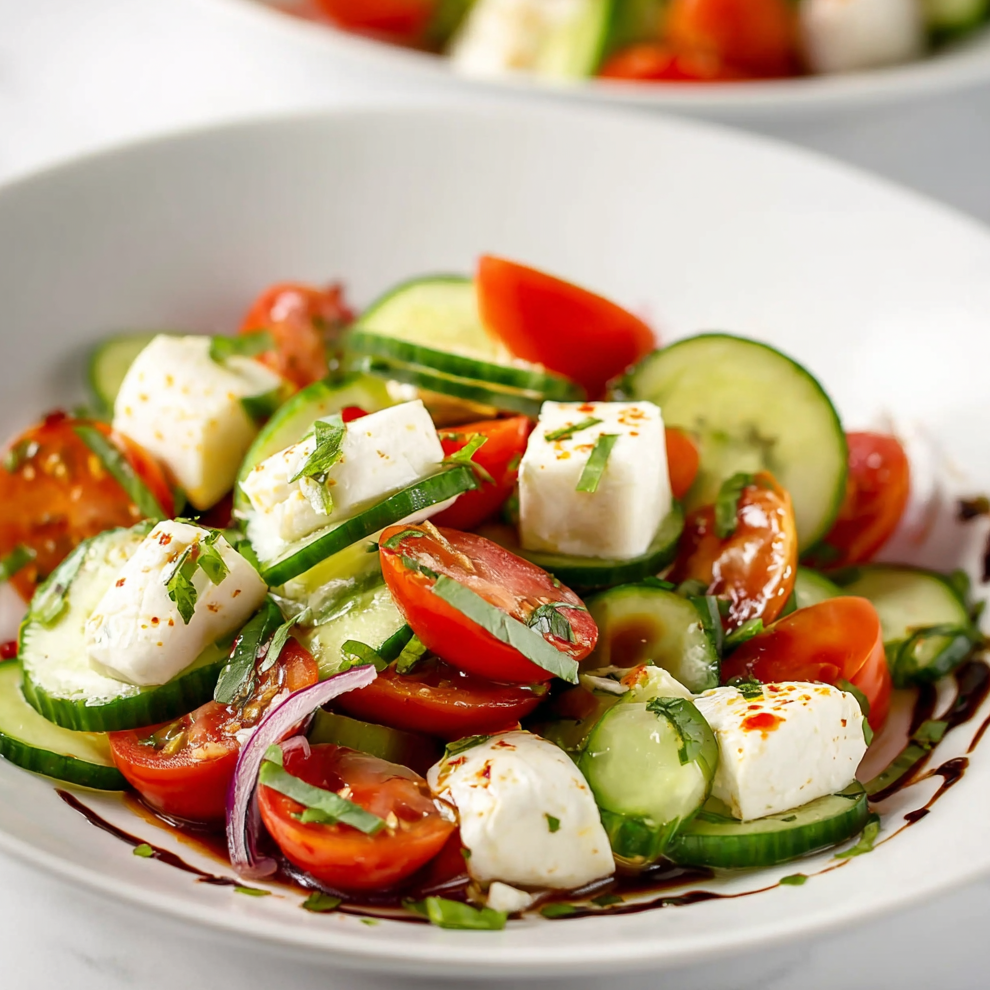
Slice the English cucumbers into 1/2-inch thick rounds. If the tomatoes are large, slice them into wedges; if using cherry tomatoes, simply halve them. Actionable Tip: Keep the cucumber and tomato pieces roughly the same size as the mozzarella pearls to ensure a “perfect bite” every time.
2. The Salt Maceration
Place the cucumbers and tomatoes in a large bowl and sprinkle with a pinch of sea salt. Let them sit for 5 minutes. Insight: This process, known as osmosis, draws out a small amount of vegetable water which, when mixed with the olive oil later, creates a natural “vinaigrette” without any extra effort.
3. The Cheese Integration
Add the mozzarella pearls to the bowl. Pro Tip: If your mozzarella is coming straight from the fridge, let it sit in a bowl of warm water (still in its packaging) for 2 minutes. “Room temperature” mozzarella has a significantly more delicate, milky flavor.
4. The Herb Infusion
Add the torn basil leaves. Tearing the leaves releases the essential oils (linalool and estragole) more effectively than a knife, which tends to bruise the cell walls.
5. The Finishing Drizzle
Drizzle with olive oil and the balsamic glaze. Toss gently—too much mixing will break down the tomatoes and make the cheese look “muddy.” Finish with a final crack of black pepper.
Nutritional Information
This salad is a low-glycemic, heart-healthy powerhouse.
| Nutrient | Amount Per Serving | Daily Value (%) |
| Calories | 210 kcal | 10% |
| Protein | 9g | 18% |
| Total Fat | 16g | 21% |
| Fiber | 2g | 8% |
| Vitamin K | 22mcg | 18% |
Healthier Alternatives for the Recipe
- Vegan Version: Replace mozzarella with extra-firm tofu cubes marinated in lemon juice and salt, or use a high-quality cashew-based vegan “mozzarella.”
- Lower Fat: Reduce the olive oil to 1 tbsp and use a lemon-juice spritz for acidity instead of the sugary balsamic glaze.
- Protein Power-Up: Add a tin of chickpeas or some grilled shrimp to turn this from a side dish into a complete, high-protein meal.
Common Mistakes to Avoid
- Using Regular “Waxy” Cucumbers: Standard garden cucumbers have thick, bitter skins and large seeds. If you must use them, peel them and scrape out the seeds with a spoon first.
- Over-Dressing: The vegetables should be “glistening,” not swimming in a pool of oil.
- Chopping Basil Ahead of Time: Basil wilts and turns brown within minutes of being cut. Always add it as the very last step.
Conclusion
The Fresh Cucumber Caprese Salad is a 15-minute masterclass in simplicity and hydration. By substituting half the traditional tomatoes for crisp English cucumber, you create a dish that is more refreshing, lower in calories, and structurally superior for outdoor gatherings.