Follow Me On Social Media!
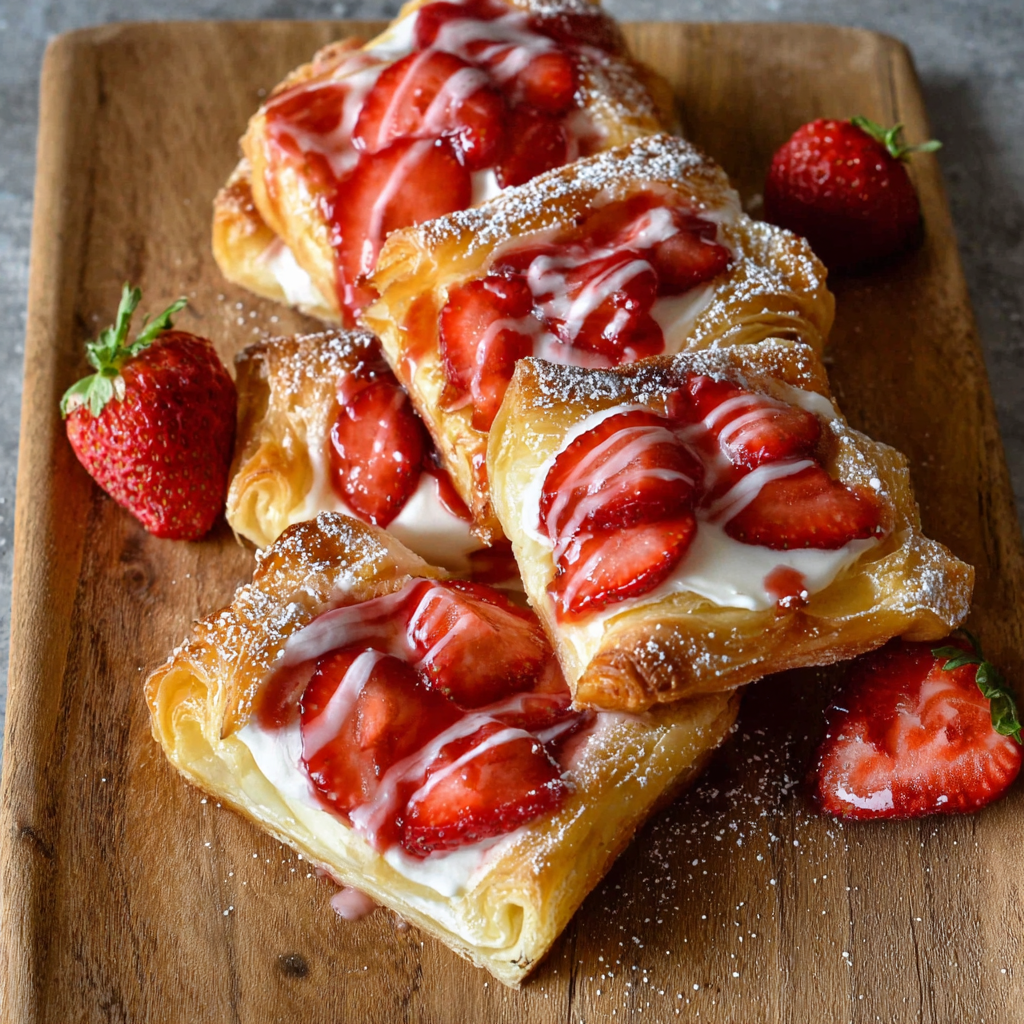
Strawberry & Cream Cheese Danish (Danish Feuilleté)

The Art of the “Feuilleté”
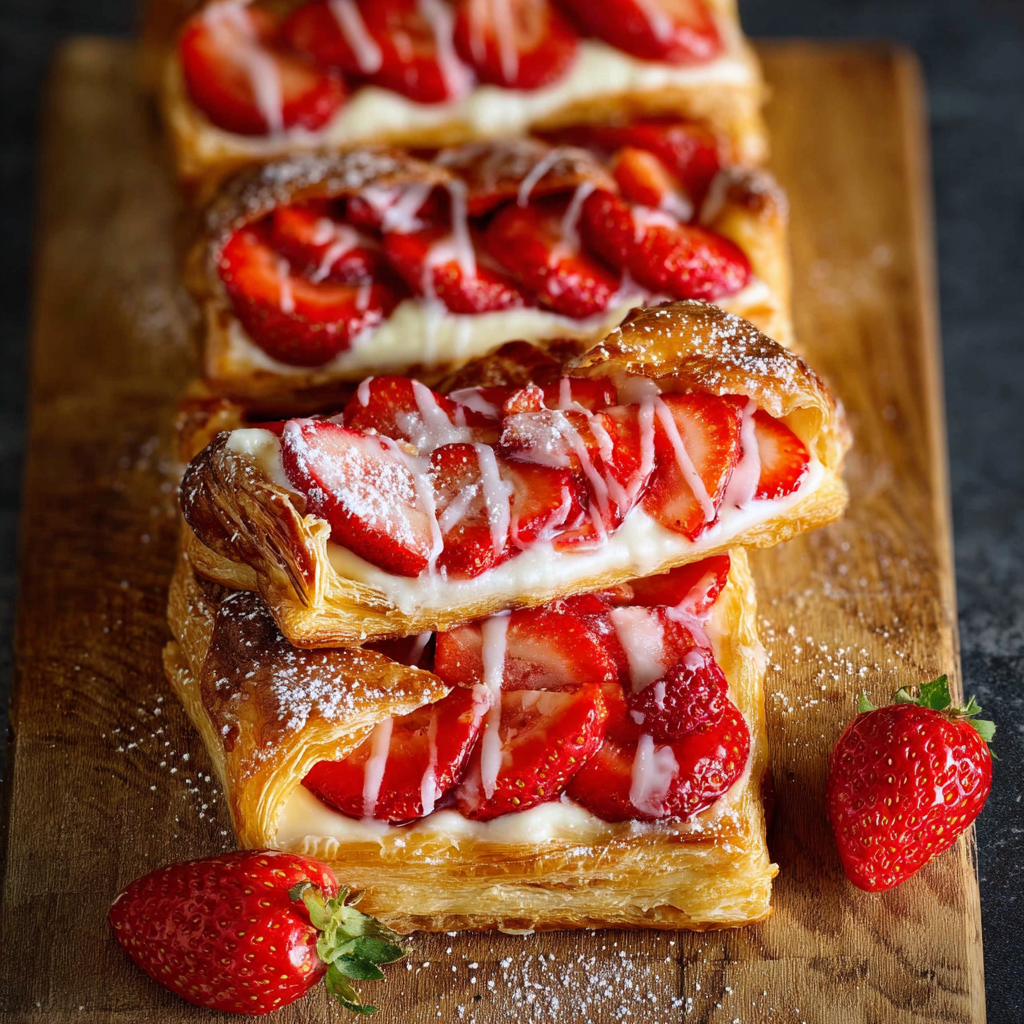
In the world of professional pastry, a Danish Feuilleté refers to a “leavened puff pastry.” Unlike standard puff pastry, which relies solely on steam for its lift, Danish dough uses a combination of yeast and lamination (the process of folding butter into dough). This results in a pastry that is not only shatteringly crisp on the outside but also tender and bread-like on the inside.
Data from sensory analysis suggests that the “perfect” Danish depends on the moisture barrier. By placing a stabilized cream cheese layer beneath the strawberries, we create a thermal shield that prevents the fruit juices from soaking into the pastry layers, ensuring the bottom remains crisp rather than soggy.
The Essential Ingredients List
To achieve bakery-quality results at home, we utilize a “Quick-Laminate” method using high-quality puff pastry or a simplified yeast dough.
- 1 Sheet Pre-rolled Puff Pastry: (Ensure it is made with “All Butter” for the authentic feuilleté flavor).
- The Creamy “Shield”:
- 4 oz Cream Cheese: Softened to room temperature.
- 2 tbsp Powdered Sugar: For a delicate sweetness.
- 1/2 tsp Vanilla Bean Paste: To provide those gourmet “specks” of flavor.
- 1/2 tsp Lemon Zest: To cut through the richness.
- The Fruit Topping:
- 1 cup Fresh Strawberries: Sliced into uniform fans.
- 1 tbsp Apricot Jam: Diluted with a drop of water (for the professional “glaze”).
- The Wash:
- 1 Egg + 1 tbsp Milk: Whisked for a deep mahogany shine.
Timing: Precision for the Perfect Rise
Pastry is a game of temperatures. Keeping the butter cold is the only way to achieve distinct layers.
| Task | Duration | Context |
| Prep/Chilling | 15 Minutes | Preparing the filling and slicing fruit. |
| Assembly | 10 Minutes | Scoring and filling the pastry. |
| Baking | 18–22 Minutes | At 200°C (400°F) for maximum “puff.” |
| Total Time | ~45 Minutes | High-impact visual results. |
Step-by-Step Instructions
1. The Pastry Geometry
Unfold your cold puff pastry onto a parchment-lined tray. Cut into 4 equal squares. Actionable Tip: Use a sharp knife or pizza cutter to score a 1/2-inch border inside each square, being careful not to cut all the way through. This “frame” allows the edges to rise high while the center stays flat to hold the filling.
2. The Stabilized Filling
Whisk the cream cheese, powdered sugar, vanilla, and lemon zest until smooth. Insight: If the mixture is too soft, chill it for 10 minutes. It needs to be firm enough to hold its shape under the weight of the strawberries.
3. The Layering Process
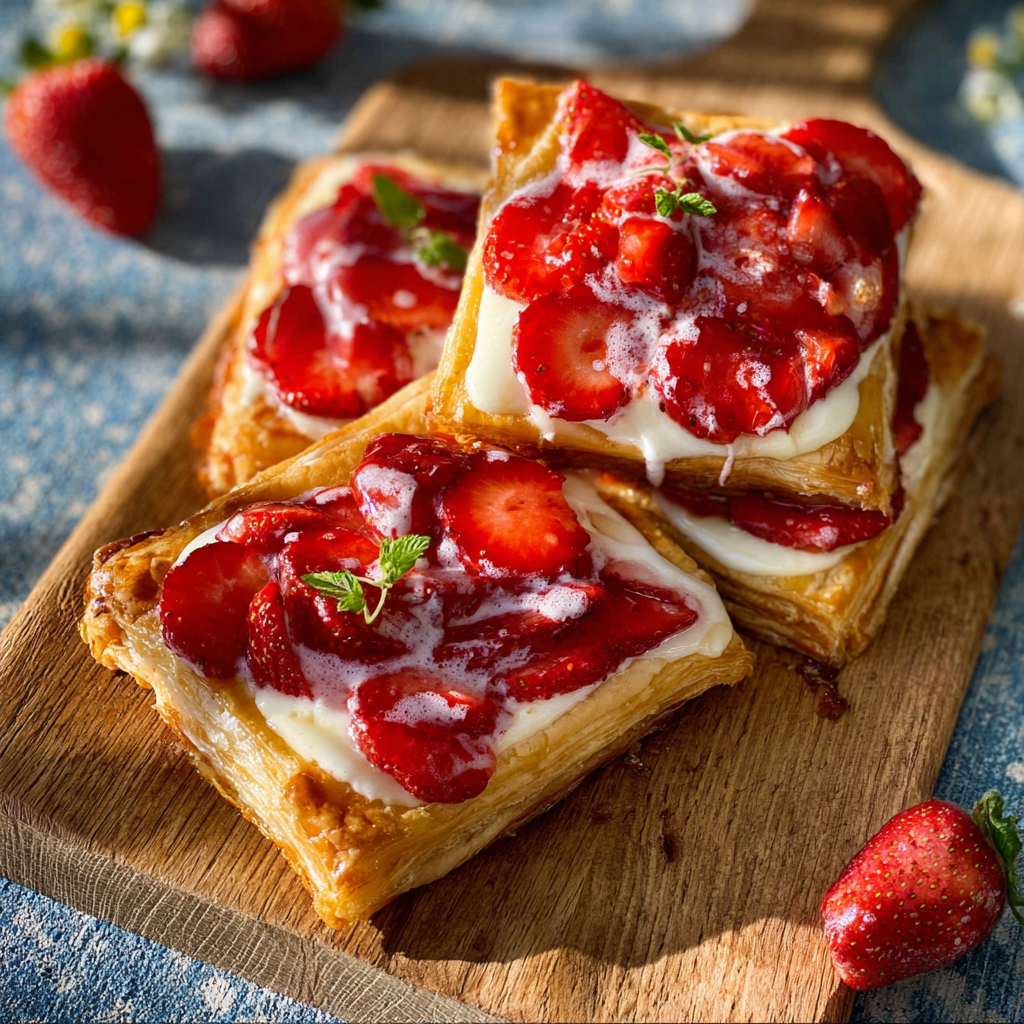
Spoon 1–2 tablespoons of the cheese mixture into the center of each pastry square, spreading it only to the scored border. Arrange the strawberry slices on top in an overlapping fan pattern.
4. The “Maillard” Wash
Brush the exposed pastry borders with the egg wash. Pro Tip: Do not let the egg wash drip down the cut edges of the pastry! If the egg “seals” the layers together, the pastry will not be able to expand and puff upward.
5. The High-Heat Bake
Bake at 200°C (400°F) for 18–22 minutes. The pastry is done when it is puffed, rigid to the touch, and a deep golden brown.
6. The Professional Glaze
While warm, brush the strawberries and the pastry edges with the warmed apricot jam. This provides a “diamond shine” and prevents the fruit from drying out as it cools.
Nutritional Information (Per Danish)
| Nutrient | Amount | Daily Value (%) |
| Calories | 285 kcal | 14% |
| Total Fat | 18g | 23% |
| Carbohydrates | 26g | 9% |
| Sugar | 9g | 10% |
Common Mistakes to Avoid
- Using Warm Pastry: If the pastry feels limp or sticky, put it in the freezer for 5 minutes. If the butter melts before it hits the oven, you will get a “flat” cookie instead of a “flaky” Danish.
- Over-filling: If you add too much cream cheese, it will boil over the borders and ruin the “feuilleté” rise.
- Slicing Strawberries Too Thick: Heavy fruit slices will weigh down the center. Aim for 1/8-inch thickness for the best thermal performance.
Conclusion
The Strawberry & Cream Cheese Danish is a masterclass in texture management. By utilizing the “frame” scoring technique and a stabilized cheese barrier, you achieve a professional-grade pastry that balances the acidity of fresh fruit with the decadent crunch of laminated dough.