Follow Me On Social Media!
White Chocolate, Orange & Almond Hot Cocoa: The “Triple-Emulsion” Treat

The Chemistry of Gourmet Cocoa
Why does this specific combination feel so much more luxurious than a standard packet? It’s a matter of aromatic layering and lipid stability.
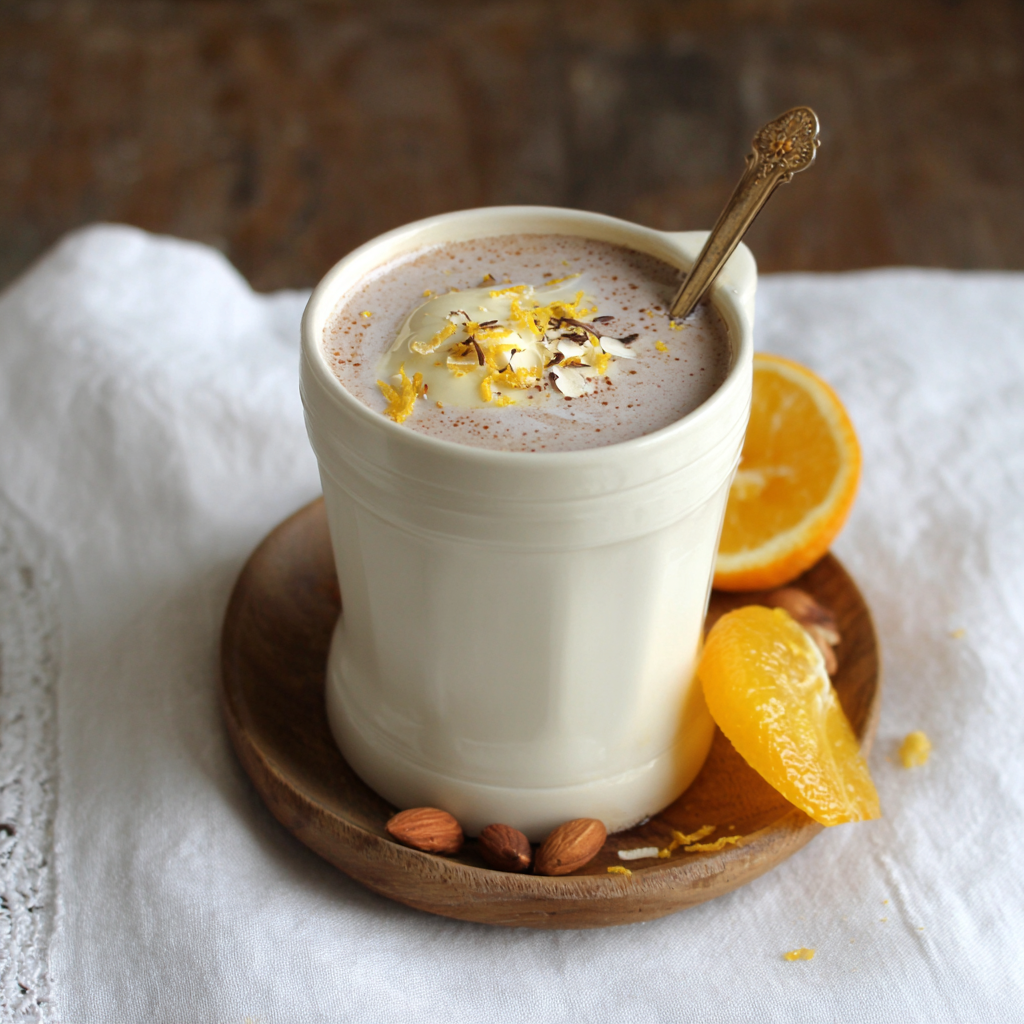
White chocolate is essentially a suspension of cocoa butter, sugar, and milk solids. Unlike dark chocolate, it lacks cocoa mass (the bitter part), making it an incredible “blank canvas” for fat-soluble flavors. When we introduce orange essential oils (from the zest) and benzaldehyde (the primary flavor compound in almond), they bond with the cocoa butter. This creates a “triple-emulsion” where the citrus brightness cuts through the heavy dairy, and the almond provides a “toasted” base note that mimics the complexity of a baked pastry.
The Essential Ingredients List
For the best texture, use a high-quality white chocolate bar rather than chips. Chips often contain “stabilizers” that prevent them from melting into a perfectly smooth liquid.
- 2 cups Whole Milk: The higher the fat content, the better the emulsion.
- 4 oz High-Quality White Chocolate: Finely chopped.
- 1/2 tsp Almond Extract: A little goes a long way; too much will taste like marzipan.
- 1 Large Orange (Zest Only): Actionable Tip: Use a microplane to get only the orange part of the peel. Avoid the white “pith,” which is bitter and will ruin the delicate white chocolate.
- The “Velvet” Finish:
- 1/4 cup Heavy Cream: To be whisked in at the end.
- A tiny pinch of Sea Salt: This is the “secret” to making the white chocolate taste less “cloying.”
Timing: The Gentle Infusion
White chocolate has a lower melting point than dark chocolate (approx. 37°C–43°C). If you boil it, the milk solids will “seize” and become grainy.
| Task | Duration | Context |
| Infusing | 5 Minutes | Warming milk with orange zest. |
| Melting | 3 Minutes | Whisking in the chocolate on low heat. |
| Total Time | 8 Minutes | Slow and steady wins the “silky” race. |
Step-by-Step Instructions
1. The Aromatic Steep
In a small saucepan, combine the milk and the orange zest. Heat over medium-low until the milk is steaming but not boiling. Insight: Steeping the zest in the milk allows the heat to release the oils from the peel, infusing the liquid before the chocolate is even added.
2. The Chocolate Integration
Turn the heat to low. Add the finely chopped white chocolate and the pinch of salt. Whisk constantly in a slow, circular motion. Pro Tip: If the milk begins to simmer too hard, remove the pan from the heat for 30 seconds.
3. The Flavor “Bloom”
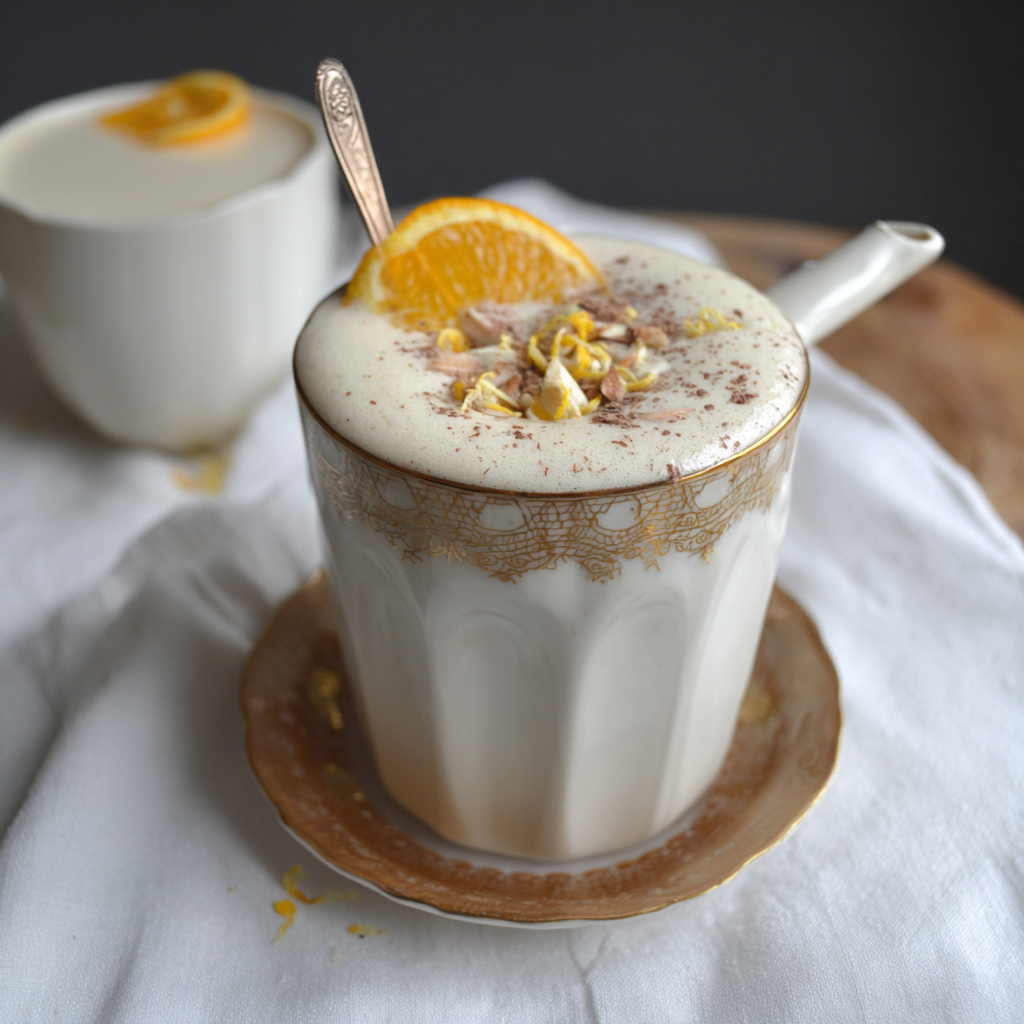
Once the chocolate is completely melted and the liquid is glossy, stir in the almond extract and the heavy cream.
4. The Final Strain
Pour the hot cocoa through a fine-mesh strainer into your mugs. This removes the orange zest, leaving you with a perfectly smooth, velvet-like drink.
Nutritional Information (Per Mug)
| Nutrient | Amount | Daily Value (%) |
| Calories | 320 kcal | 16% |
| Total Fat | 18g | 23% |
| Carbohydrates | 34g | 12% |
| Protein | 8g | 16% |
Common Mistakes to Avoid
- Boiling the Milk: As mentioned, white chocolate is fragile. Boiling will cause the proteins in the milk and the chocolate to separate, leaving an oily film on top.
- Using Pre-Zested Peel: Orange zest loses its potency within minutes of being grated. Zest directly into the pot for the most vibrant flavor.
- Skipping the Salt: White chocolate is essentially all sugar and fat. Without a pinch of salt to provide contrast, the drink can feel “heavy” after just a few sips.
Conclusion
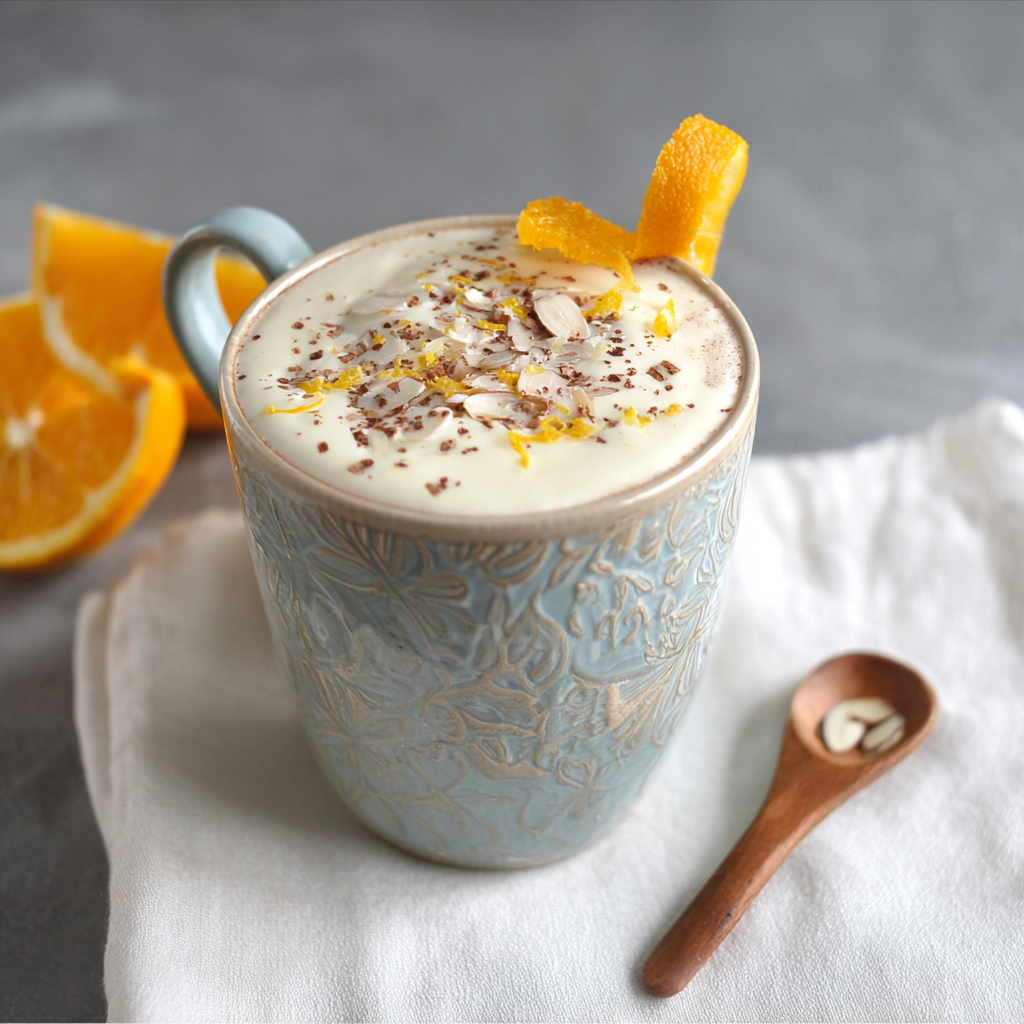
White Chocolate, Orange & Almond Hot Cocoa is a sophisticated alternative to traditional dark chocolate drinks. By respecting the delicate melting point of white chocolate and layering in citrus and almond aromatics, you create a beverage that feels like a liquid dessert from a high-end European cafe.