Follow Me On Social Media!
Crème Brûlée Inspired Cupcakes: The “Torch & Cream” Transformation

The Science of the “Inspired” Hybrid
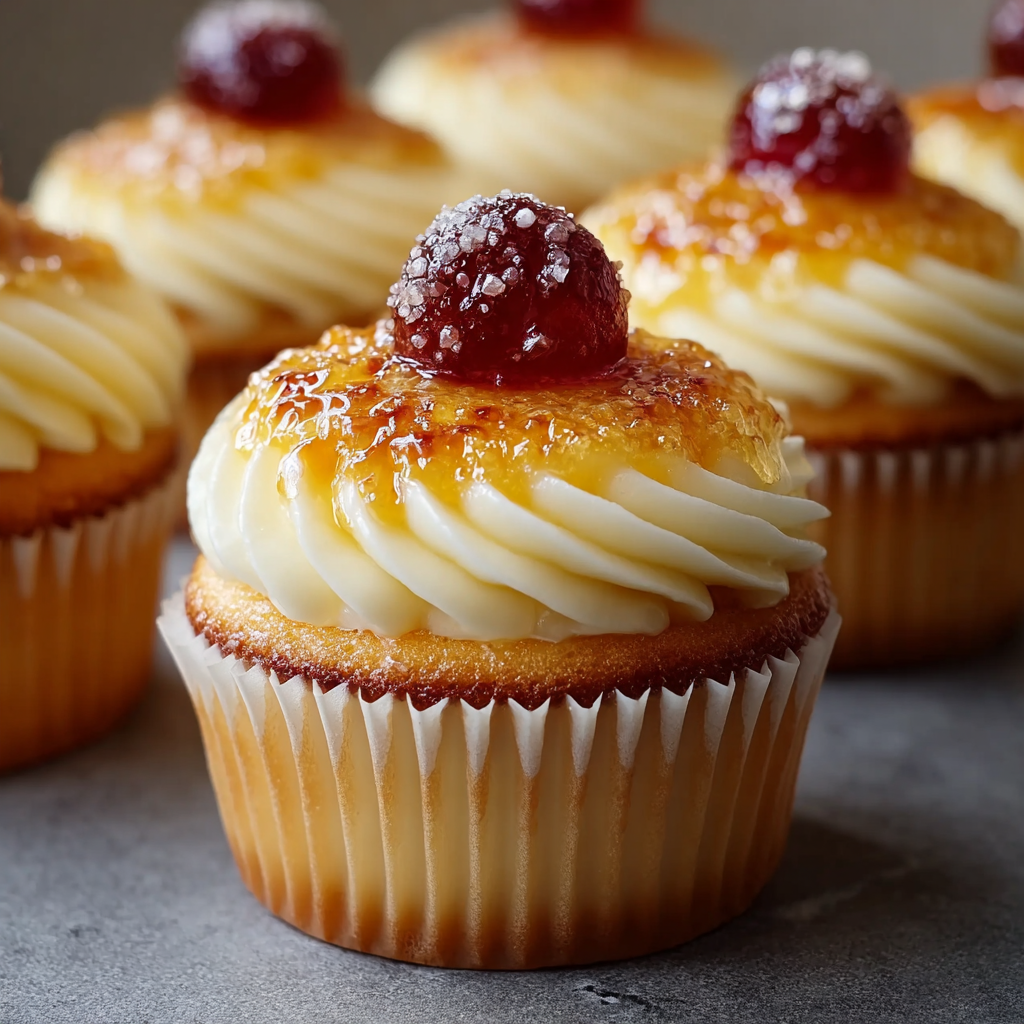
What makes a Crème Brûlée iconic? It is the contrast of temperatures and textures: the cold, silky custard versus the hot, shattered sugar glass. Recreating this in a cupcake requires a “Technical Layering” approach.
We use a Chiffon-style cake base because its airy structure mimics the lightness of custard. The core is then replaced with a Pastry Cream (Crème Pâtissière)—which is essentially the stabilized version of a Brûlée base. Finally, we use a Blowtorch (or a high-heat broiler) to caramelize a sugar cap, creating that signature “snap” that releases the scent of burnt vanilla.
The Essential Ingredients List
1. The Vanilla Bean Sponge
- 1.5 cups Cake Flour: For a fine, tight crumb.
- 3/4 cup Granulated Sugar.
- 1/2 cup Whole Milk & 2 Large Eggs: Room temperature.
- 1/4 cup Unsalted Butter: Melted and cooled.
- 1 tbsp Vanilla Bean Paste: Using the paste (with the black specks) is vital for the visual “Brûlée” look.
2. The Custard Core (The “Crème”)
- 1 cup Prepared Pastry Cream: You can make this from scratch with egg yolks, sugar, and cornstarch, or use a high-quality vanilla bean pudding.
3. The “Snap” Topping
- Swiss Meringue Buttercream: A lighter, less sweet frosting that handles heat better than American buttercream.
- Extra Granulated Sugar: For the final caramelization.
Timing: The Multi-Stage Assembly
| Task | Duration | Context |
| Baking | 18 Minutes | Creating the “vessel.” |
| Pastry Cream | 10 Minutes | Thickening the custard core. |
| The Burn | 5 Minutes | Torching the sugar caps. |
| Total Time | ~1 Hour | Requires cooling time before filling. |
Step-by-Step Instructions
1. The Vanilla Bake
Whisk your dry ingredients, then fold in the milk, eggs, and butter until smooth. Bake at 175°C (350°F) for 18 minutes. Insight: Don’t overfill the liners; you want a flat top to make frosting and torching easier.
2. The “Core” Extraction
Once the cupcakes are completely cool, use a small knife or a cupcake corer to remove the center of each cake. Actionable Tip: Eat the cores (the chef’s perk!) and fill the holes to the brim with your chilled pastry cream.
3. The Meringue Border
Pipe a flat, smooth circle of Swiss Meringue Buttercream over the top, completely sealing in the custard. Pro Tip: If the frosting is “domed,” use a palette knife to flatten it. A flat surface caramelizes more evenly.
4. The “Brûlée” Moment
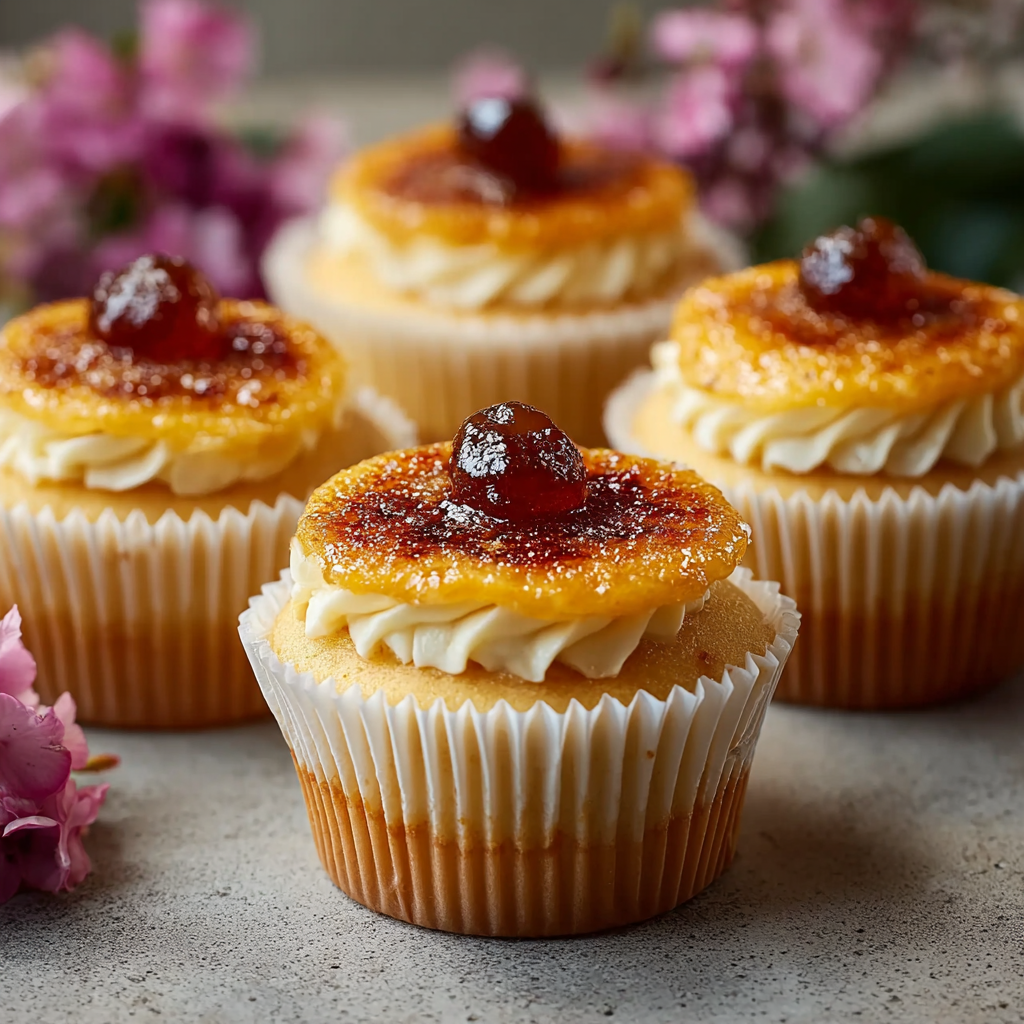
Dip the frosted top of the cupcake directly into a bowl of granulated sugar so it’s heavily coated. Use a kitchen torch to melt the sugar until it bubbles and turns a deep amber brown.
5. The Set
Wait 2 minutes before serving. This allows the sugar to harden into a glass-like shell.
Nutritional Information (Per Cupcake)
| Nutrient | Amount | Daily Value (%) |
| Calories | 290 kcal | 14% |
| Total Fat | 14g | 18% |
| Sugars | 22g | 25% |
| Protein | 4g | 8% |
Common Mistakes to Avoid
- Torching Cold Frosting: If the buttercream is straight from the fridge, the sugar will take longer to melt, and you might accidentally melt the frosting underneath. Let them sit at room temp for 10 minutes first.
- Using a Broiler instead of a Torch: While possible, a broiler heats the entire cupcake, which can make the custard core runny. A torch provides “localized heat,” keeping the cake cool while the sugar burns.
- Filling Warm Cakes: If the cake is still warm, the pastry cream will soak into the sponge, and you’ll lose that distinct “custard pocket.”
Conclusion
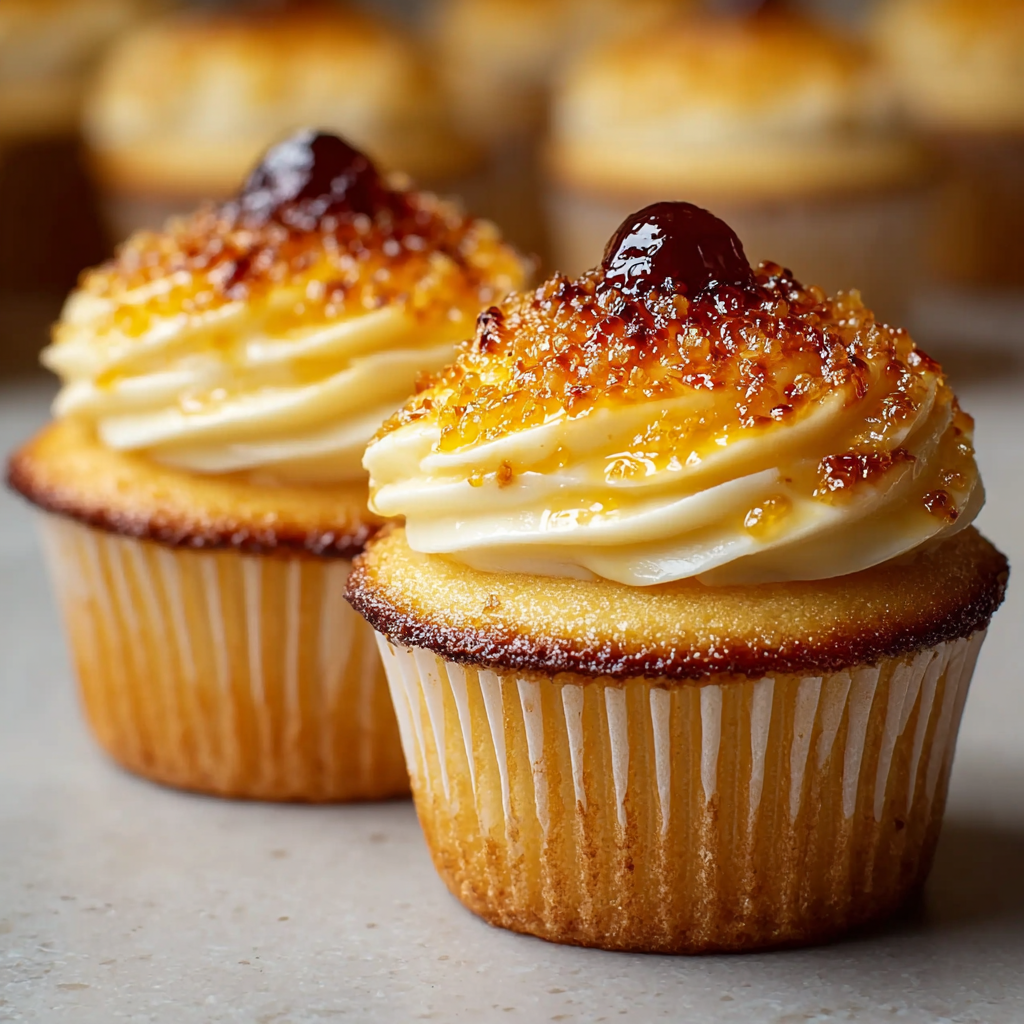
Crème Brûlée Inspired Cupcakes are a sophisticated fusion. They offer the nostalgic comfort of a cupcake with the high-end sensory experience of a French bistro dessert. The “crack” of the sugar lid followed by the cool custard center is a guaranteed crowd-pleaser.