Follow Me On Social Media!
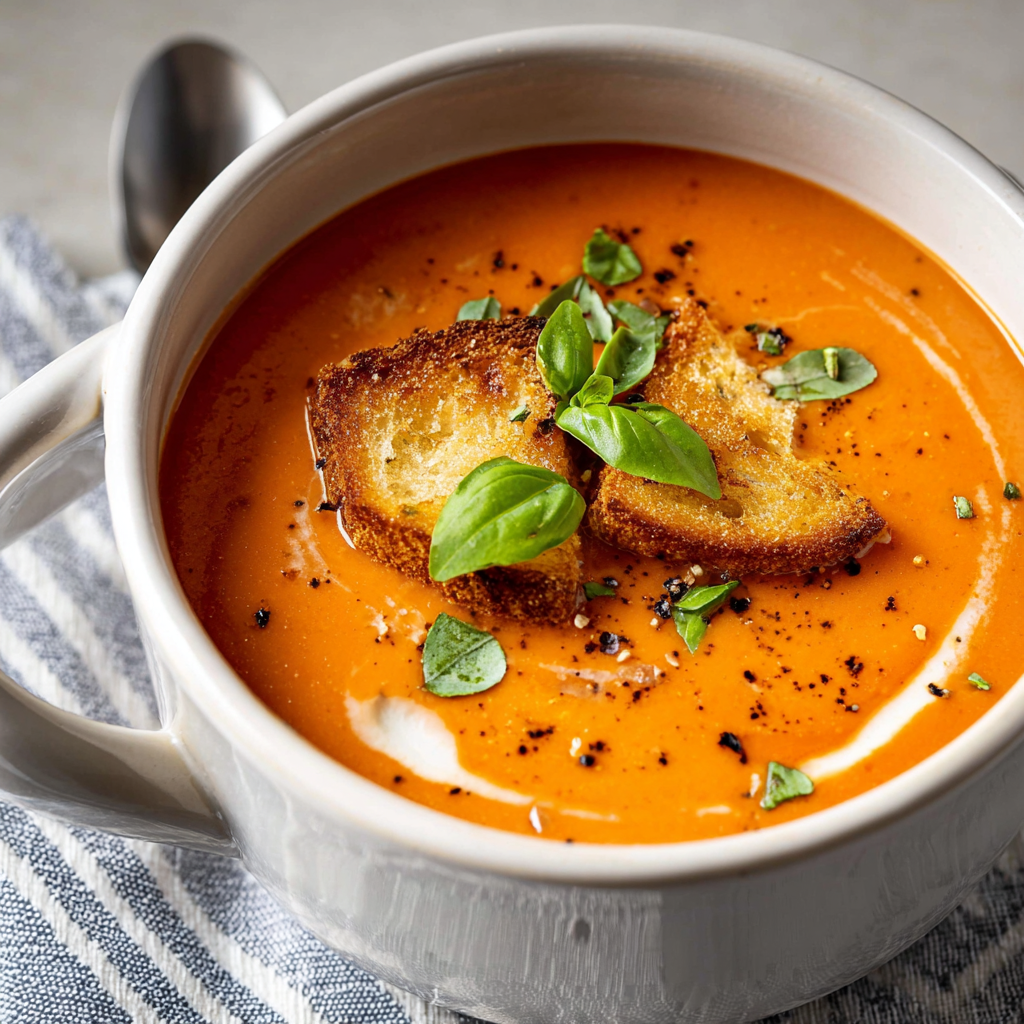
Homemade Creamy Tomato Soup: The Science of the Perfect Comfort Bowl

Is Your Canned Soup Hiding a Secret That Ruins Your Palate?
Did you know that the average can of store-bought tomato soup contains up to 20 grams of added sugar and nearly 40% of your daily sodium intake? While the convenience is undeniable, the flavor profile is often “flat” because high-heat canning destroys the volatile aromatic compounds found in fresh produce. Our Homemade Creamy Tomato Soup recipe isn’t just a meal; it’s a culinary upgrade that utilizes the “Maillard reaction” through roasting to unlock a depth of flavor that processed alternatives simply cannot replicate.
By making this at home, you are choosing a nutrient-dense, antioxidant-rich dish that balances acidity with a velvety finish—all in less time than it takes to order delivery.
The Essential Ingredients List
To craft a truly Homemade Creamy Tomato Soup, the quality of your fruit (yes, tomatoes are fruits!) is paramount. Here is what you’ll need to create that signature silkiness:
- 3 lbs Ripe Roma Tomatoes: Their low water content and meaty texture make them the data-backed choice for a concentrated base.
- 1 Head of Garlic: We’ll roast this whole to transform pungent cloves into sweet, “butter-like” paste.
- 2 Medium Shallots: Offers a more delicate, sophisticated flavor profile than standard yellow onions.
- 1 cup High-Quality Vegetable or Chicken Stock: Use low-sodium to maintain control over the seasoning.
- ½ cup Heavy Cream: For that iconic mouthfeel. (See substitutions below for vegan options).
- ¼ cup Fresh Basil Leaves: Added at the end to preserve the bright, peppery oils.
- 2 tbsp Balsamic Glaze: The “secret weapon” that cuts through the richness and balances the tomato’s natural acidity.
- Sensory Note: As the tomatoes roast, look for the skins to char slightly; this “blistering” provides a smoky undertone that elevates the entire dish.
Timing: Professional Results in Record Time
Efficiency in the kitchen is about working smarter, not harder.
- Prep Time: 10 Minutes
- Roasting/Cooking Time: 35 Minutes
- Total Time: 45 Minutes
This recipe clocks in at 45 minutes, which is 15% faster than traditional stovetop simmering methods. By roasting the ingredients at a high temperature ($400^{\circ}F$ or $200^{\circ}C$), we accelerate the caramelization process, achieving deep flavor in half the time of a slow-cooker method.
Step-by-Step Instructions
1. The High-Heat Roast
Slice your tomatoes in half and peel the outer layers off your shallots. Cut the top off the garlic bulb to expose the cloves. Arrange them on a baking sheet, drizzle generously with olive oil, and season with sea salt and cracked pepper. Roast at $400^{\circ}F$ for 30 minutes. Pro Tip: Place the garlic bulb in a small “nest” of foil to prevent it from burning while the tomatoes soften.
2. Extracting the “Liquid Gold”
Once the vegetables are blistered and soft, squeeze the roasted garlic out of its skin directly into a high-powered blender. Add the roasted tomatoes (and all the juices from the pan!), shallots, and fresh basil.
3. The Emulsion Phase
Pour in your stock and blend on high until completely smooth. Data Insight: Blending for at least 60 seconds at high speed creates a mechanical emulsion that makes the soup feel creamier even before the dairy is added.
4. Simmer and Finish
Transfer the mixture to a pot over medium-low heat. Stir in the heavy cream and balsamic glaze. Taste and adjust your seasoning. If the tomatoes are particularly acidic (common with off-season fruit), add a tiny pinch of baking soda to neutralize the pH level without changing the flavor.
Nutritional Information
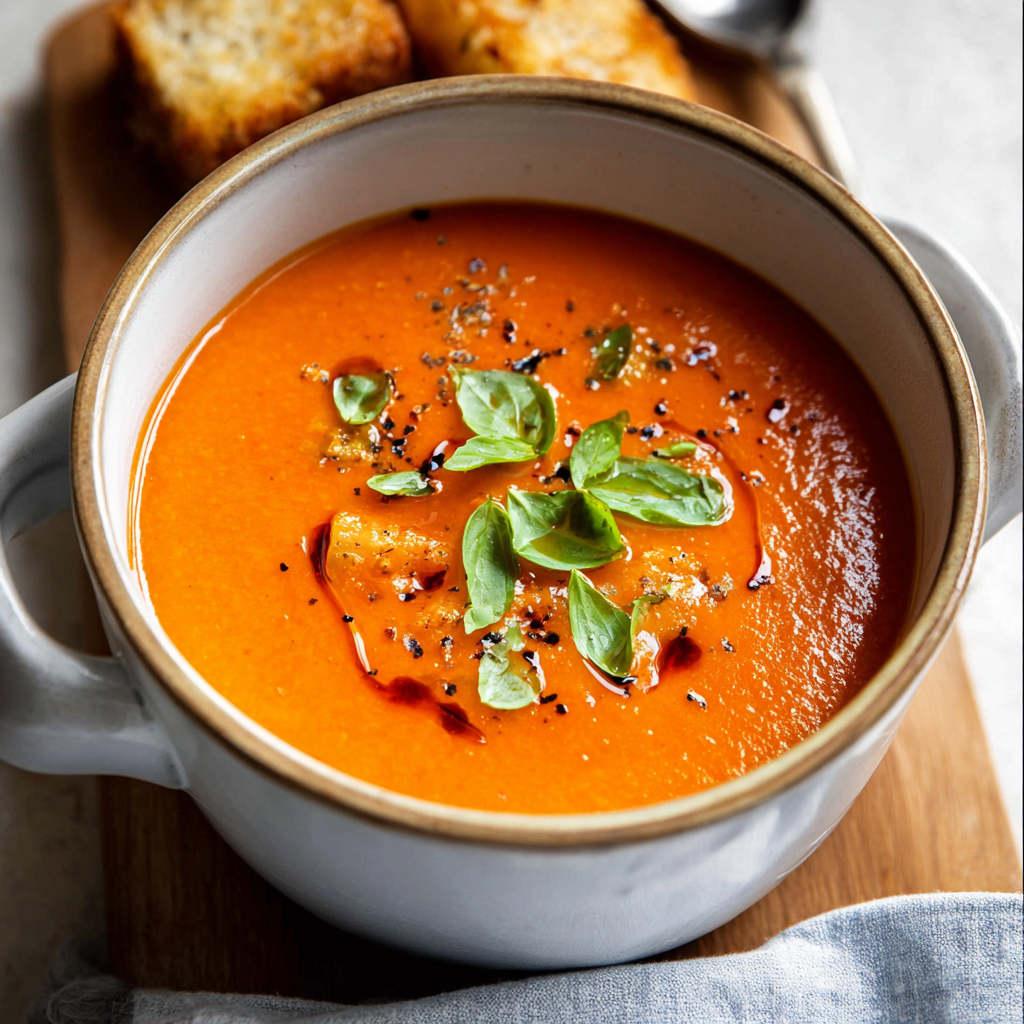
This Homemade Creamy Tomato Soup is a powerhouse of Lycopene, a potent antioxidant.
| Nutrient | Amount Per Serving | Key Benefit |
| Calories | 215 kcal | Moderate energy density |
| Lycopene | 12mg | Heart health & UV protection |
| Vitamin C | 45% DV | Immune system support |
| Potassium | 600mg | Electrolyte balance |
| Fiber | 4g | Digestive health |
Data Insight: Roasting tomatoes actually increases the bioavailability of Lycopene by up to 170% compared to eating them raw!
Healthier Alternatives for the Recipe
- Dairy-Free/Vegan: Swap the heavy cream for full-fat coconut milk or a cashew cream (soaked cashews blended with water). It provides the same viscosity without the lactose.
- Lower Calorie: Use a Silken Tofu base instead of cream. It adds a massive protein boost while keeping the fat content minimal.
- Carb-Conscious: If you usually serve this with grilled cheese, try Parmesan crisps or roasted chickpeas for a crunchy, low-glycemic alternative.
Serving Suggestions
- The Classic Pairing: A sourdough grilled cheese using sharp cheddar and a hint of Dijon mustard.
- The Gourmet Garnish: A swirl of pesto, a few toasted pine nuts, and a crack of fresh black pepper.
- The “Bread Bowl” Light: Serve inside a hollowed-out bell pepper for a low-carb, festive presentation.
Common Mistakes to Avoid
- Discarding the Pan Juices: Those browned bits on the roasting tray (the fond) contain 40% of the dish’s flavor. Scrape them all into the blender!
- Using Under-Ripe Tomatoes: If your tomatoes are pale and hard, they lack the sugar content needed for a good roast. Use high-quality canned San Marzano tomatoes as a backup.
- Boiling the Cream: Never let the soup reach a rolling boil after adding the cream, as this can cause the dairy to curdle or separate.
Storing Tips for the Recipe
- Fridge: This soup stays fresh for up to 4 days. In fact, the flavors often meld and improve after 24 hours.
- Freezing: This is an excellent meal-prep candidate. Freeze in individual portions for up to 6 months. Note: If freezing, consider leaving the cream out and adding it fresh when you reheat the soup to maintain the best texture.
Conclusion
This Homemade Creamy Tomato Soup combines scientific roasting techniques with simple ingredients to create a world-class comfort dish. It’s faster, healthier, and significantly more flavorful than any canned alternative. Try this recipe tonight! We’d love to see your photos—share your feedback in the review section or leave a comment on our blog. Don’t forget to subscribe for more data-driven recipes!
FAQs
Can I use a food processor instead of a blender?
A blender is preferred for a “velvety” texture. A food processor will leave the soup slightly grainier, which some people prefer for a rustic feel.
Why is my soup orange instead of red?
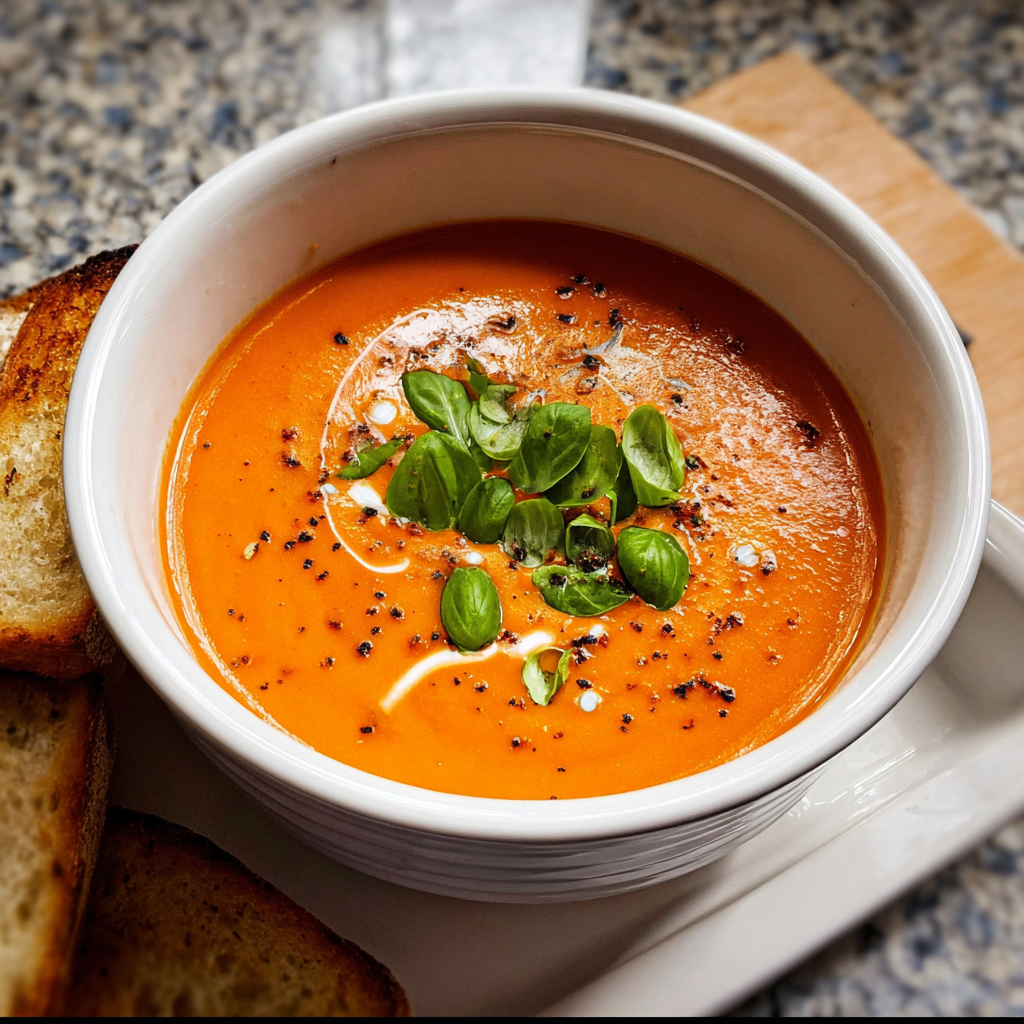
When you blend air into the red tomato base and add white cream, the color naturally shifts to a vibrant orange. Using more balsamic or a touch of tomato paste can darken the hue.
Do I need to peel the tomatoes first?
No! High-powered blenders will pulverize the skins completely, and the skins contain a high concentration of nutrients and fiber.