Follow Me On Social Media!
Mango Sago: The “Starch-Suspension” Chilled Dessert

The Science of the “Pearl”
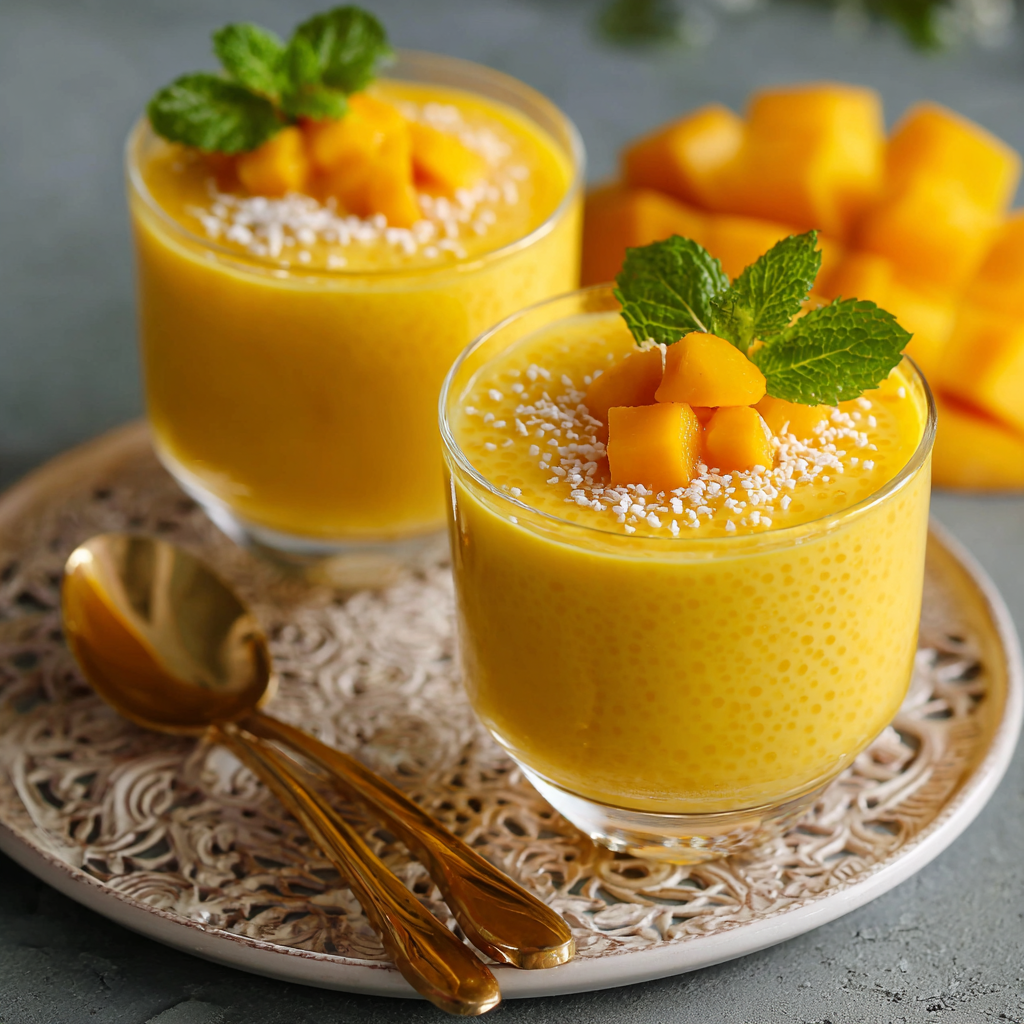
Mango Sago is a masterclass in hydrocolloidal texture. The “sago” pearls are small spheres of starch traditionally extracted from the pith of tropical palm stems (though tapioca from cassava is a common modern substitute).
When boiled, the starch granules undergo gelatinization: they absorb water, swell, and turn translucent. The “snap” or chewiness of the pearl is maintained by immediate retrogradation—shocking the cooked pearls in cold water. This stops the cooking process and prevents the outer starch layers from becoming mushy, ensuring each pearl remains a distinct, slippery island within the creamy mango sea.
The Essential Ingredients List
Serves 4.
- The Base & Fruit:
- 3 Large Ripe Mangoes: (Ataulfo, Champagne, or Philippine varieties are best for their non-fibrous, buttery texture).
- 1/2 cup Small Sago (or Tapioca) Pearls.
- The “Liquid Gold” Mixture:
- 1 cup (240ml) Coconut Milk: (Canned, full-fat provides the most authentic silkiness).
- 1/4 cup Sweetened Condensed Milk: (Adjust for sweetness).
- A pinch of Sea Salt: (Essential for amplifying the tropical fruit sugars).
- Optional Mix-ins:
- 1/2 cup Nata de Coco: (Coconut jelly) for extra textural contrast.
- Pomelo Segments: (For the “Mango Pomelo Sago” Hong Kong variation).
Timing: The “Translucency” Window
| Task | Duration | Context |
| Pearl Boiling | 10–15 Minutes | Until mostly clear with a tiny white dot. |
| The “Steep” | 10 Minutes | Residual heat finishes the core. |
| Chilling | 2 Hours+ | Mandatory for the flavors to meld. |
| Total Time | ~2.5 Hours | Serve ice-cold. |
Step-by-Step Instructions
1. The Perfect Pearls
Bring a large pot of water (at least 6 cups) to a rolling boil. Add sago pearls and stir immediately to prevent sticking. Boil for 10 minutes. Turn off the heat, cover the pot, and let them sit for 10 minutes. Actionable Tip: The pearls are done when they are completely translucent. If they still have a white center, let them steep longer. Drain and rinse under cold water immediately.
2. The Mango Puree
Peel and dice all the mangoes. Reserve about 1/3 of the prettiest cubes for topping. Place the remaining 2/3 into a blender with the coconut milk, condensed milk, and salt. Blend until ultra-smooth.
3. The “Marbled” Assembly
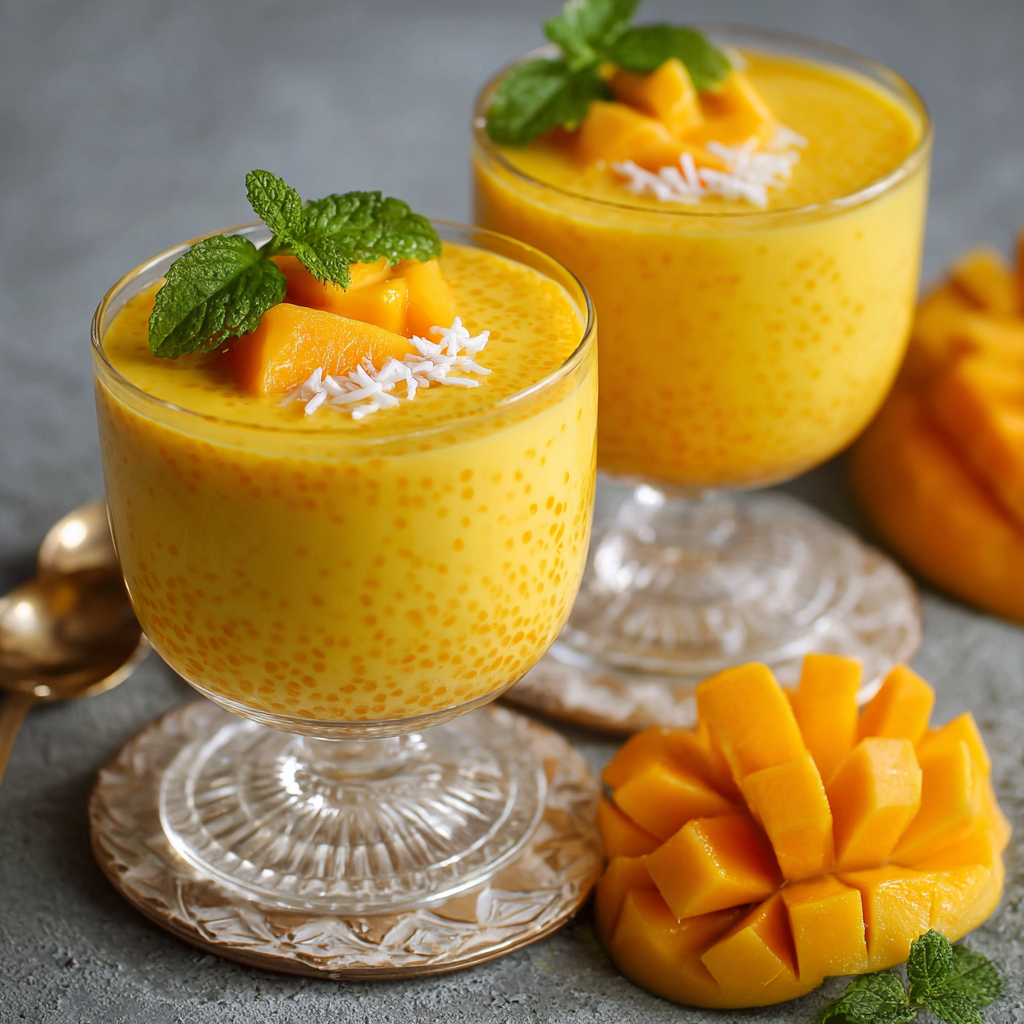
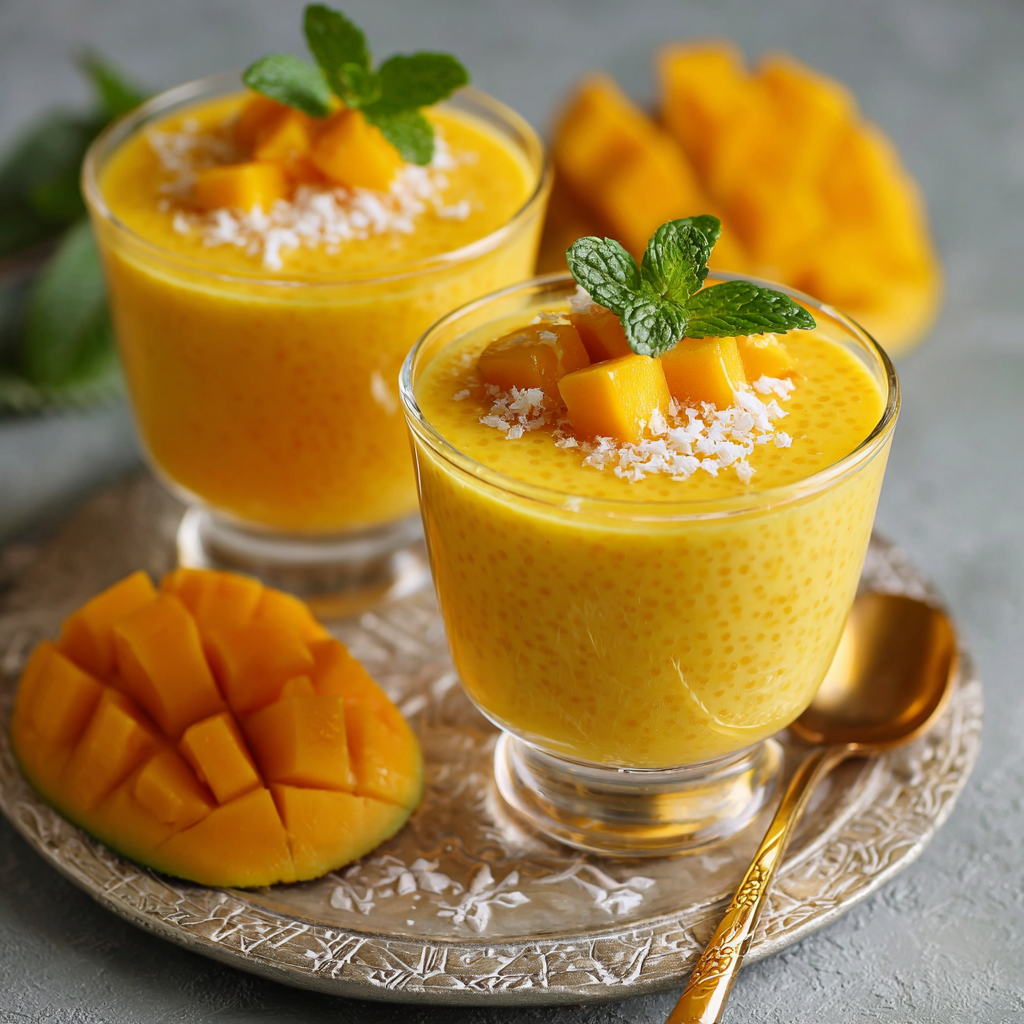
In a large bowl, combine the mango puree and the cooked sago pearls. Stir gently. The pearls should look like suspended bubbles in the thick orange cream.
4. The Cold Set
Cover and refrigerate for at least 2 hours. As it chills, the sago pearls will absorb some of the mango nectar, becoming even more flavorful.
5. The Garnish
Serve in small bowls or glasses. Top with the reserved fresh mango cubes and, if you have it, a sprinkle of pomelo or a mint leaf.
Nutritional Information (Per Serving)
| Nutrient | Amount | Daily Value (%) |
| Calories | 280 kcal | 14% |
| Total Fat | 12g | 15% |
| Carbohydrates | 45g | 16% |
| Vitamin C | 48mg | 55% |
Common Mistakes to Avoid
- Adding Pearls to Cold Water: If you don’t wait for the water to boil, the sago will dissolve into a starchy paste instead of forming pearls.
- Using Underripe Mangoes: Ripe mangoes are the sole source of the dessert’s perfume. If they aren’t soft and fragrant, the dessert will taste “flat.”
- Skipping the Rinse: If you don’t rinse the pearls thoroughly in cold water after cooking, the excess surface starch will turn your dessert into a thick, gloopy block instead of a fluid pudding.
Conclusion
Mango Sago is a hallmark of modern Asian dessert culture, originating in Hong Kong in the 1980s. It perfectly balances the richness of coconut with the bright, acidic punch of fresh mango.