Follow Me On Social Media!
Sicilian Pesto alla Trapanese: The “Port of Call” Sauce

The Science of the “Crushed” Cell Wall
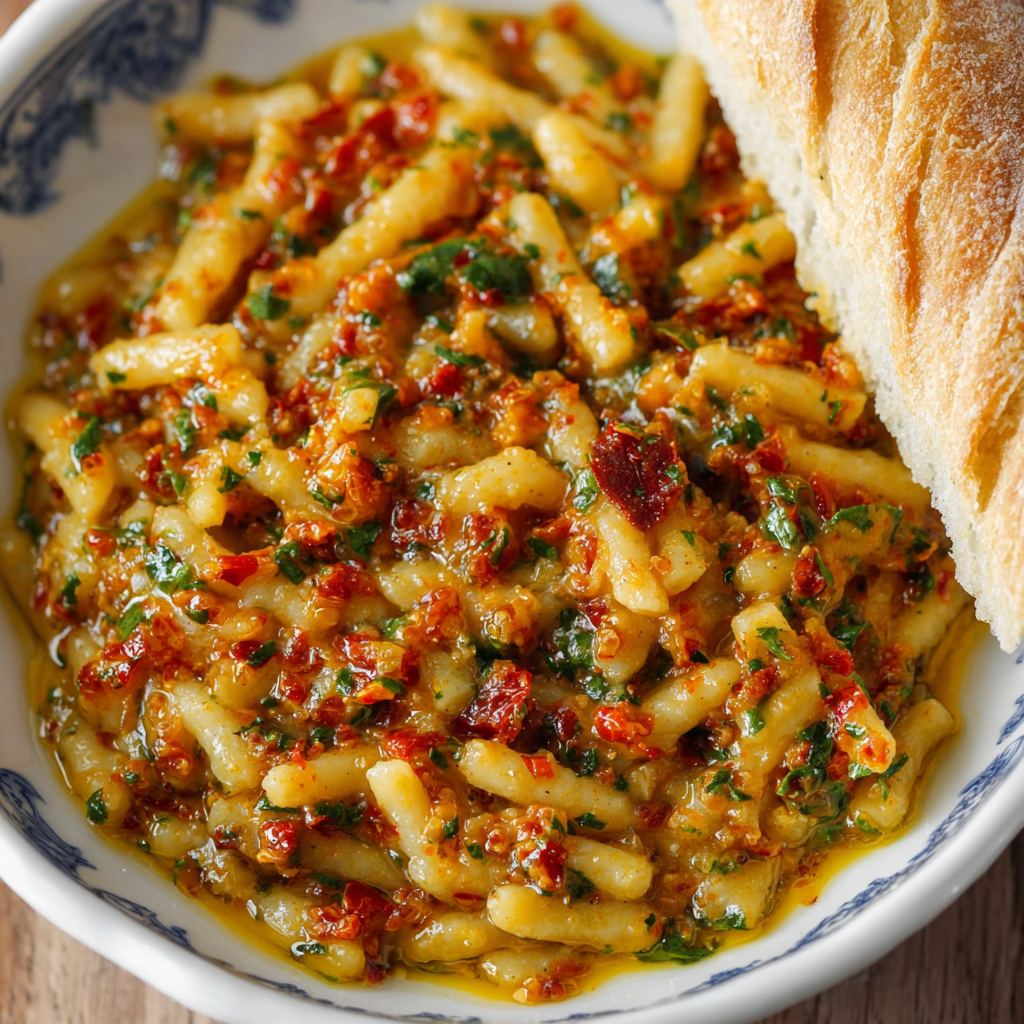
The true soul of Pesto alla Trapanese (known locally as Pasta cu l’agghia) lies in the mechanical rupture of plant cells. Unlike a blender, which uses high-speed blades to slice through ingredients, a mortar and pestle uses friction and weight to “burst” the cell walls of the garlic and basil.
This process releases the essential oils and activates enzymes like alliinase in the garlic, creating a spicier, more aromatic emulsion. The almonds, when pounded, release their natural oils, which act as a stabilizer for the tomato juices, resulting in a creamy, “rustic” texture that clings to pasta far better than a purely liquid sauce.
The Essential Ingredients List
This recipe honors the tradition of the port city of Trapani.
- 1/2 cup (70g) Blanched Almonds: Peeled and lightly toasted.
- 1 lb (500g) Ripe Tomatoes: Roma or Cherry (San Marzano is excellent).
- 2 cloves Red Garlic: Nubia red garlic is traditional, but any high-quality garlic works.
- 1 packed cup (40g) Fresh Basil Leaves.
- 1/2 cup Grated Sicilian Pecorino: (Or Parmesan for a milder kick).
- 1/3 cup Extra Virgin Olive Oil: Use a robust Sicilian oil if possible.
- A pinch of Sea Salt & Black Pepper.
Timing: The “Fresh & Raw” Window
| Task | Duration | Context |
| Blanching Tomatoes | 5 Minutes | Loosening the skins. |
| Pounding/Grinding | 10 Minutes | Developing the aromatic paste. |
| Resting | 15 Minutes | Allowing the flavors to “meld.” |
| Total Time | ~30 Minutes | No cooking required for the sauce. |
Step-by-Step Instructions
1. The Tomato Prep
Score a small “X” on the bottom of the tomatoes. Drop them into boiling water for 30 seconds, then plunge into ice water. Peel off the skins, remove the seeds, and roughly chop the flesh. Actionable Tip: Removing the seeds prevents the pesto from becoming too watery.
2. The Almond & Garlic Base
In a mortar, pound the garlic and a pinch of salt until it becomes a smooth paste. Add the toasted almonds and crush them until they are grainy but not pulverized into flour. Insight: You want “texture” in a Trapanese pesto—the grains of almond are its signature.
3. The Green Infusion
Add the basil leaves and use a circular grinding motion. The salt acts as an abrasive to help break down the leaves into a vibrant green smear.
4. The Tomato Integration
Add the chopped tomatoes to the mortar. Continue to pound and stir until they break down and marry with the nut-garlic paste.
5. The Emulsion
Stir in the grated cheese. Slowly drizzle in the olive oil while stirring constantly to create a thick, rustic sauce. Season with pepper to taste.
Nutritional Information (Per Serving – Sauce Only)
| Nutrient | Amount | Daily Value (%) |
| Calories | 185 kcal | 9% |
| Protein | 5g | 10% |
| Total Fat | 16g | 21% |
| Fiber | 2g | 8% |
Common Mistakes to Avoid
- Over-Processing: If you use a food processor, use the “Pulse” setting. If you turn it into a perfectly smooth puree, you lose the “rustic” Sicilian character.
- Using Bitter Almonds: Ensure your almonds are fresh. Old, rancid almonds will ruin the delicate sweetness of the tomatoes.
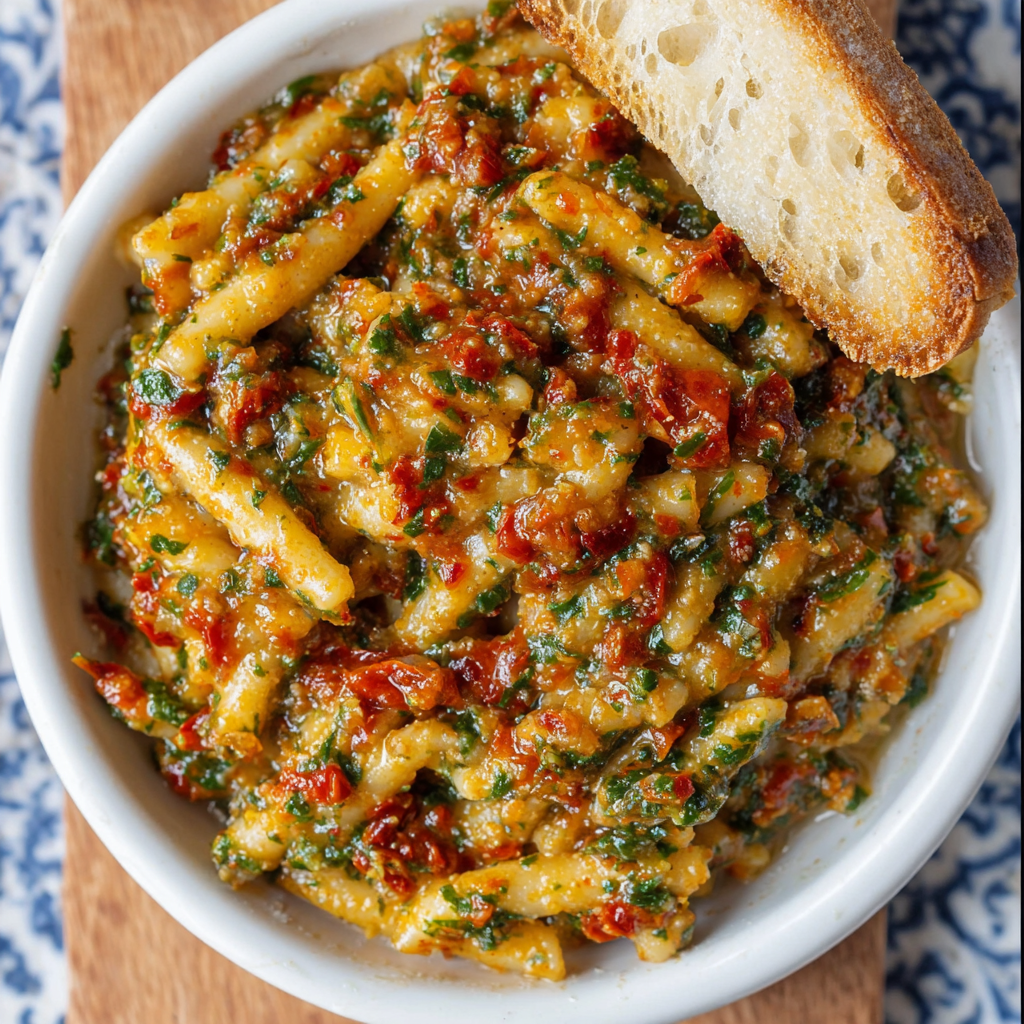
- Serving with the Wrong Pasta: Traditionally, this is served with Busiate (a spiral-shaped Sicilian pasta). If you can’t find it, use Fusilli or Gemelli—the curves are essential for “trapping” the almond bits.
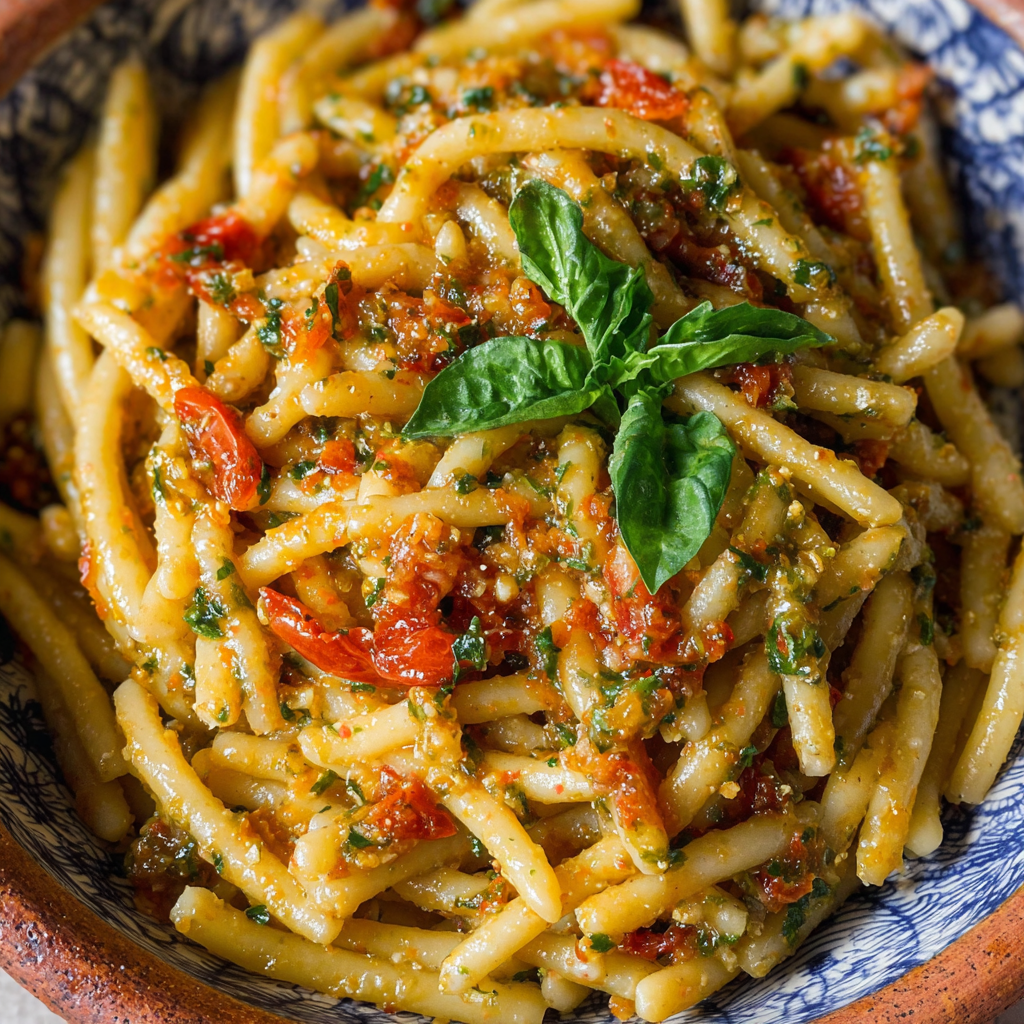
Conclusion
Pesto alla Trapanese is a testament to Sicily’s history, born from sailors bringing Genovese pesto traditions to a land rich in almonds and tomatoes. It is a bright, raw, and sun-drenched alternative to the better-known green version.