Follow Me On Social Media!
Ultra-Creamy Basque Cheesecake: The “Controlled Burn”

The Science of the “Burnt” Exterior
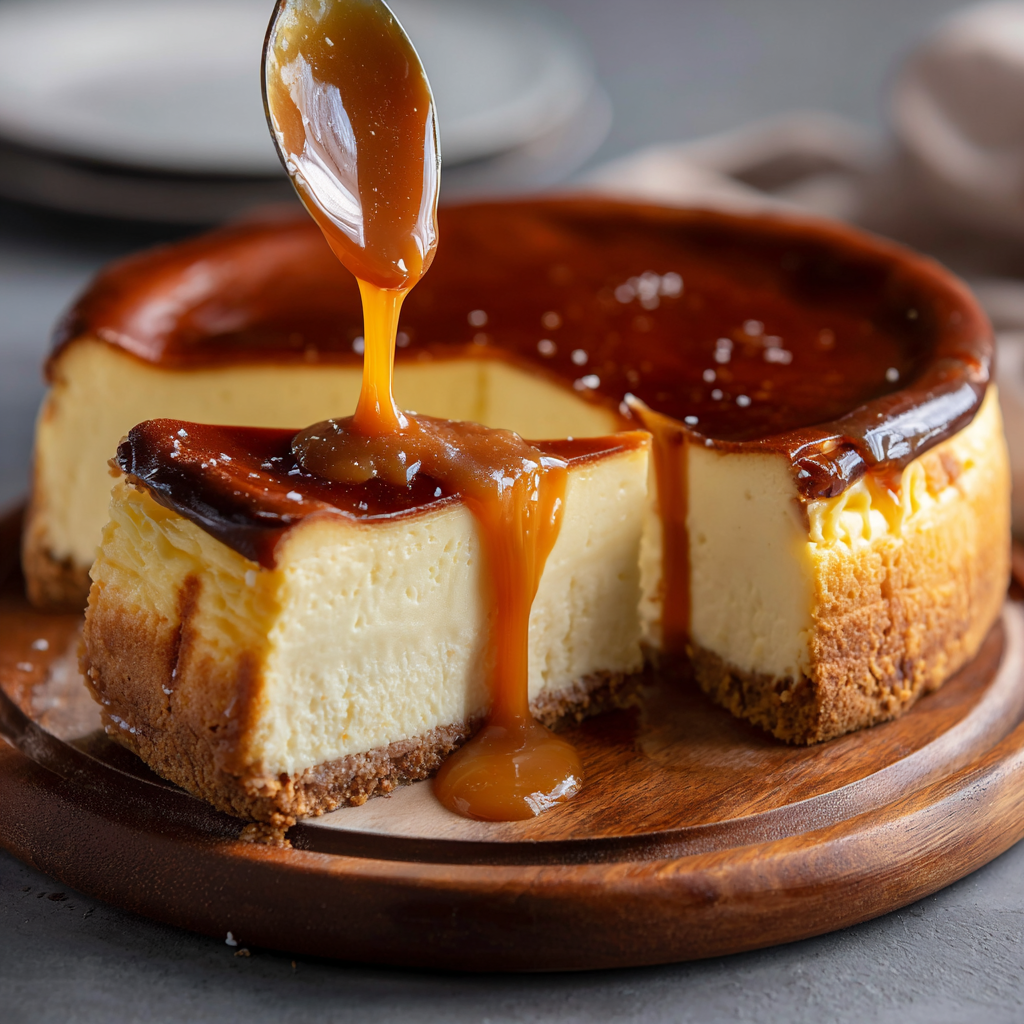
Unlike its New York cousin, the Basque Cheesecake (or Tarta de Queso) thrives on high-temperature caramelization. By baking at 200°C–210°C, we bypass the need for a water bath.
This creates a Maillard reaction on the surface, turning the proteins and sugars into a dark, bitter-sweet crust that tastes of toasted marshmallows. Meanwhile, the high heat doesn’t fully penetrate the core, leaving the center at a lower temperature where the eggs and cream cheese form a delicate, “lava-like” custard rather than a firm cake.
The Essential Ingredients List
Ensure all dairy is at room temperature for a lump-free emulsion.
- The Cheesecake Core:
- 1kg (35 oz) Full-Fat Cream Cheese: (Philadelphia style).
- 1.5 cups (300g) Granulated Sugar.
- 6 Large Eggs: Added one by one.
- 2 cups (500ml) Heavy Cream: Minimum 35% fat.
- 1 tsp Salt & 1 tbsp Vanilla Bean Paste.
- 1/4 cup All-Purpose Flour: Sifted (acts as a light stabilizer).
- The Salted Caramel Sauce:
- 1 cup Sugar.
- 6 tbsp Salted Butter: Cubed.
- 1/2 cup Heavy Cream.
- 1/2 tsp Sea Salt Flakes.
Timing: The “Wobble” Window
| Task | Duration | Context |
| Mixing | 15 Minutes | Avoid over-aerating the batter. |
| High-Heat Bake | 50–55 Minutes | Look for the “Blackened” top. |
| The “Set” | 6 Hours+ | Critical for the internal structure. |
| Total Time | ~7 Hours | Passive cooling is mandatory. |
Step-by-Step Instructions
1. The “Rustic” Lining
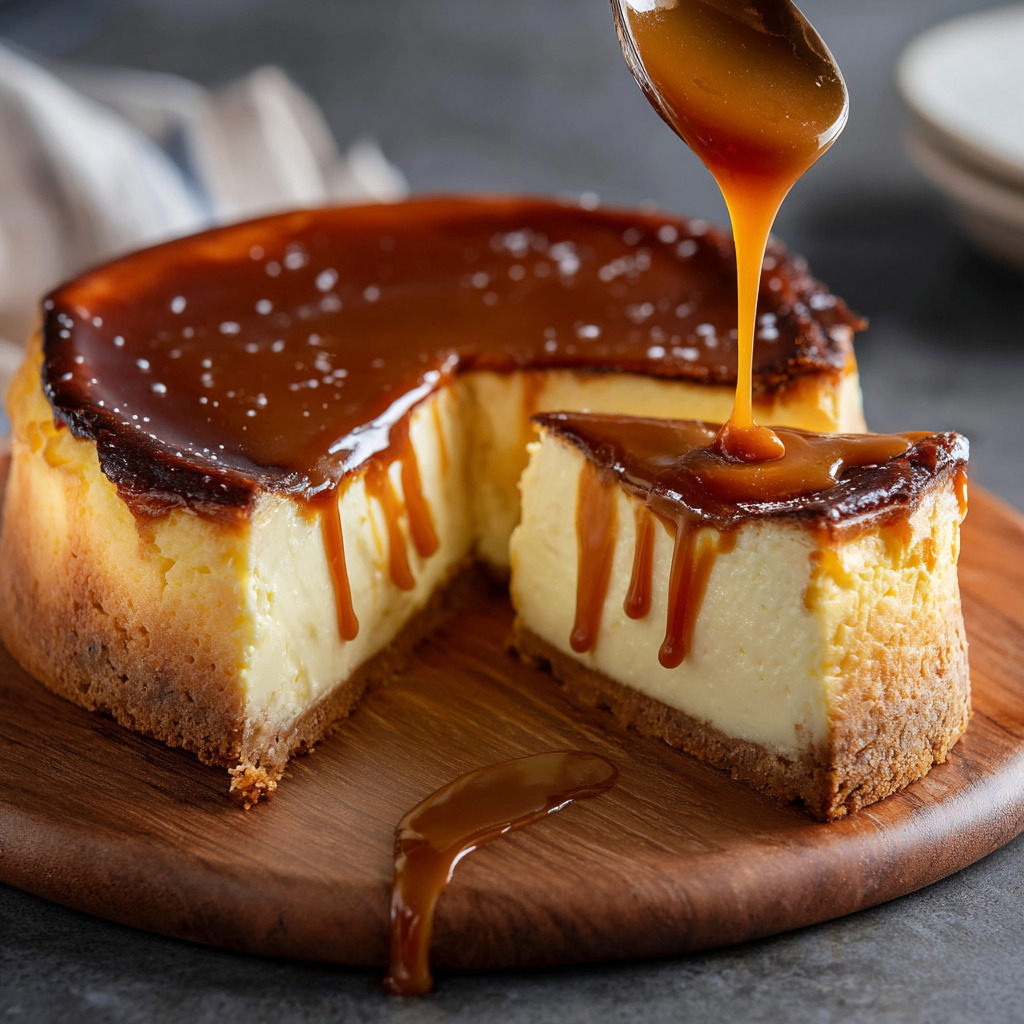
Preheat oven to 210°C (410°F). Line a 23cm (9-inch) springform pan with two sheets of parchment paper, overlapping them so the paper sticks up at least 2 inches above the rim. Actionable Tip: Scrunch the paper into a ball first, then flatten it; this makes it easier to fit into the corners for that iconic “pleated” look.
2. The Homogeneous Batter
Beat the cream cheese and sugar until perfectly smooth. Add eggs one at a time, mixing just until incorporated. Pour in the heavy cream, vanilla, and salt. Finally, fold in the sifted flour. Insight: Do not use a whisk at high speed—excess air bubbles will cause the cake to rise and collapse like a souffle rather than staying creamy.
3. The “Extreme” Bake
Pour the batter into the pan and bake for 50–55 minutes. The top should be dark brown (nearly black in spots), but the cake should still have a pronounced jiggle in the center when shaken.
4. The Salted Caramel
While the cake cools, melt sugar in a saucepan over medium heat, stirring constantly until it turns a deep amber. Remove from heat, whisk in butter (careful, it will steam!), then slowly pour in the cream and salt. Whisk until smooth.
5. The Rest
Let the cheesecake cool completely in the pan at room temperature, then refrigerate for at least 6 hours. This allows the center to transform from “liquid” to “velvet.”
Nutritional Information (Per Serving)
| Nutrient | Amount | Daily Value (%) |
| Calories | 520 kcal | 26% |
| Total Fat | 38g | 49% |
| Sugars | 35g | 39% |
| Protein | 8g | 16% |
Common Mistakes to Avoid
- Pulling it out too early: If the top is just “golden,” you haven’t achieved the Basque flavor profile. It needs to be dark brown to provide the necessary bitter contrast to the sweet interior.
- Using Cold Ingredients: Cold cream cheese will result in tiny white lumps that no amount of mixing can fix. Leave everything on the counter for 2 hours before starting.
- Cutting while Hot: If you cut this cake warm, the center will literally run off the plate. Patience is the primary ingredient here.
Conclusion
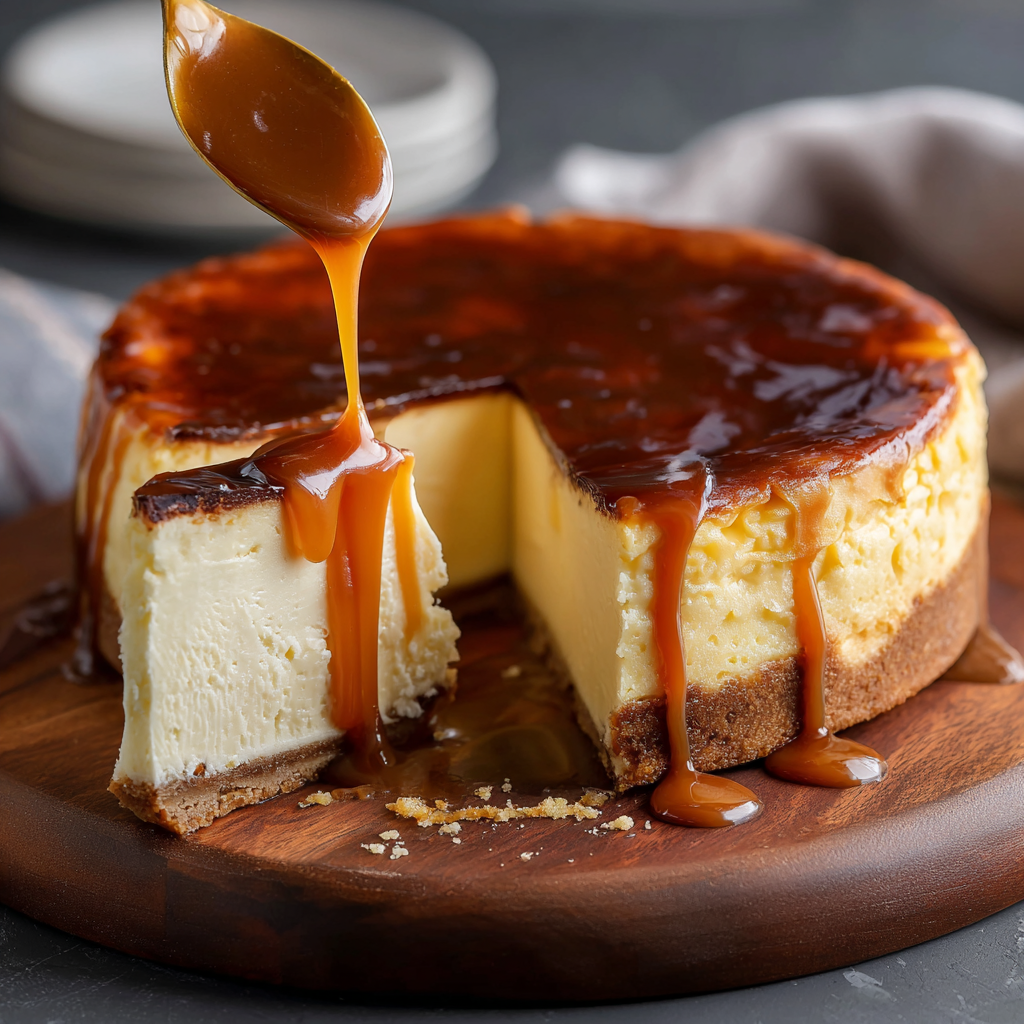
The Basque Cheesecake is the “anti-cheesecake”—no crust, no water bath, and no perfectionism required. It’s a rustic, charred masterpiece that pairs perfectly with the sharp, salty snap of the caramel.