Follow Me On Social Media!
Rustic Garlic & Rosemary Homemade Bread: The “Dutch Oven” Masterpiece

The Science of the “No-Knead” Crumb
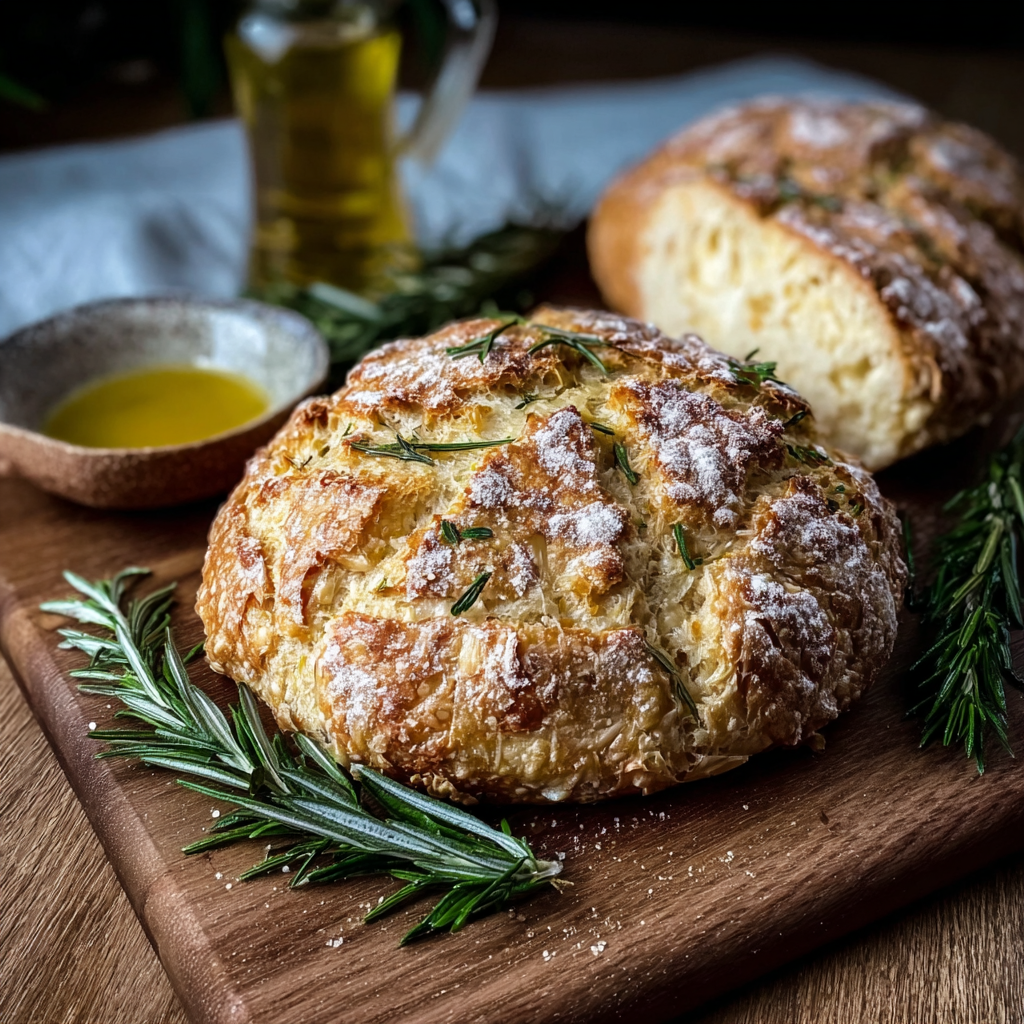
This bread utilizes the long-fermentation method. Instead of physical kneading to develop gluten, we use time and hydration.
Over 12–18 hours, natural enzymes break down the flour’s proteins, creating a complex, sourdough-like flavor profile without the need for a starter. When baked inside a preheated Dutch Oven, the pot traps the steam escaping from the dough. This steam keeps the surface of the loaf moist, allowing the bread to expand fully (the “oven spring”) and gelatinizing the surface starches to create that shatteringly crisp, “rustic” crust.
The Essential Ingredients List
- 3 cups (approx. 400g) All-Purpose or Bread Flour: Plus extra for dusting.
- 1.5 cups Warm Water: Approximately 38°C (100°F) to wake up the yeast.
- 1 tsp Active Dry Yeast: Or instant yeast.
- 1.5 tsp Sea Salt: Essential for slowing the yeast and strengthening gluten.
- The “Rustic” Aromatics:
- 3 cloves Garlic: Finely minced or pushed through a press.
- 2 tbsp Fresh Rosemary: Finely chopped. (Dried works, but use only 2 tsp).
- 1 tbsp Extra Virgin Olive Oil: To soften the crumb slightly.
Timing: The “Patience” Window
| Task | Duration | Context |
| Mixing | 5 Minutes | Shaggy dough stage. |
| First Rise | 12–18 Hours | Room temperature (Overnight is best). |
| Second Rise | 45 Minutes | Shaping while the oven preheats. |
| Baking | 45 Minutes | 30 mins covered / 15 mins uncovered. |
| Total Time | ~19 Hours | Passive effort for maximum flavor. |
Step-by-Step Instructions
1. The Shaggy Dough
In a large glass bowl, whisk together the flour, yeast, salt, rosemary, and garlic. Pour in the warm water and olive oil. Stir with a wooden spoon until a “shaggy,” sticky ball forms and no dry flour remains. Actionable Tip: Do not overwork it. You just want it incorporated.
2. The Long Sleep
Cover the bowl tightly with plastic wrap or a beeswax wrap. Let it sit at room temperature (away from drafts) for 12 to 18 hours. You’ll know it’s ready when the surface is dotted with bubbles and the dough has doubled in size.
3. The Pre-Heat
Place a 5-to-7-quart Dutch oven (with the lid) into your oven. Preheat to 230°C (450°F). Insight: The pot must be screaming hot before the dough enters to ensure the bottom doesn’t stick and the crust crisps instantly.
4. The Fold & Shape
Turn the dough out onto a well-floured surface. It will be sticky—don’t be afraid to flour your hands. Fold the edges toward the center to form a ball. Place the dough on a piece of parchment paper, cover with a towel, and let it rest for 30–45 minutes.
5. The Steam Bake
Carefully lift the parchment paper and dough and drop it into the hot Dutch oven. Cover with the lid. Bake for 30 minutes.
6. The Final Color
Remove the lid. The bread will be pale. Bake for another 10–15 minutes uncovered until the crust is a deep, rustic mahogany.
Nutritional Information (Per Slice)
| Nutrient | Amount | Daily Value (%) |
| Calories | 160 kcal | 8% |
| Total Fat | 2g | 3% |
| Carbohydrates | 31g | 10% |
| Fiber | 1.5g | 6% |
Common Mistakes to Avoid
- Cutting Too Soon: As tempting as it is, you must let the bread cool on a wire rack for at least 30 minutes. The bread is still “cooking” internally; if you cut it hot, the steam escapes instantly, leaving the rest of the loaf gummy.
- Using Cold Water: If your water is too cold, the yeast won’t activate in time for the long rise. If it’s too hot (above 45°C), you’ll kill the yeast. Aim for “baby bath” temperature.
- Old Garlic: Freshly minced garlic is vital. Pre-minced garlic in oil is too wet and can affect the dough’s rise.
Conclusion
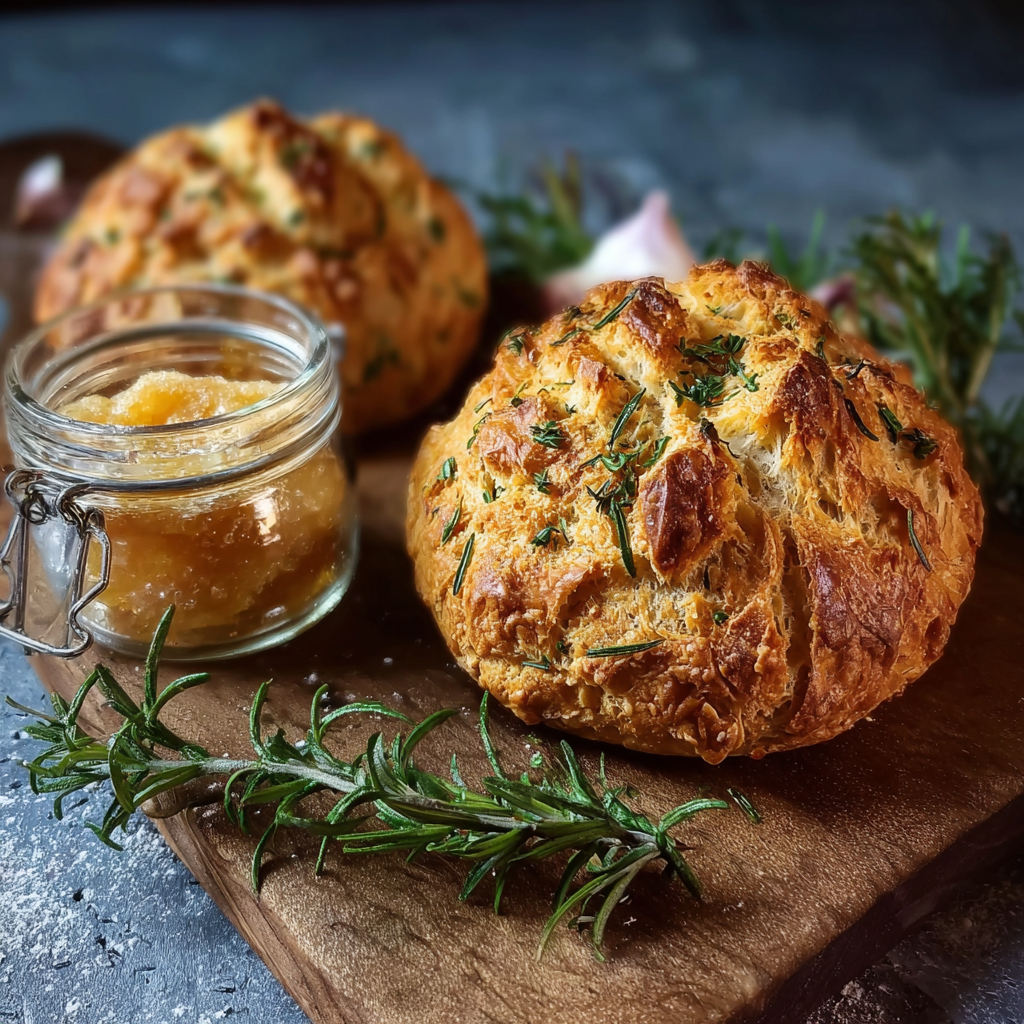
Rustic Garlic & Rosemary Homemade Bread is a sensory experience—the smell of roasting garlic and piney rosemary will fill your entire home. It’s the perfect accompaniment to soups, stews, or simply a thick slab of salted butter.