Follow Me On Social Media!
Extreme Lemon Bundt Cake: The “Triple-Saturation” Method

The Science of “Extreme” Lemon
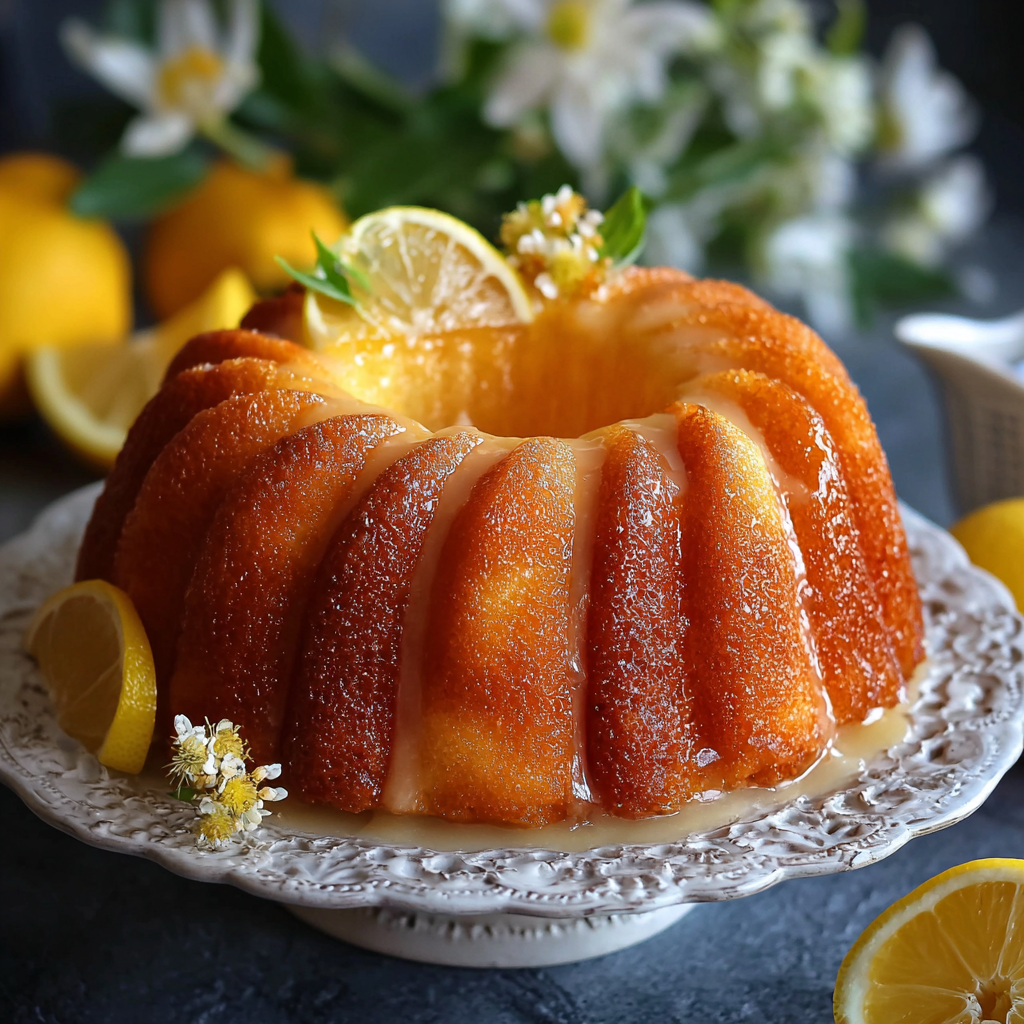
Most lemon cakes lose their punch in the oven because lemon essential oils are volatile and dissipate under high heat. This “Extreme” version uses a triple-saturation technique to ensure the flavor is structural, not just topical:
- Zest Rubbing (The Infusion): By rubbing lemon zest into granulated sugar before mixing, you use the sugar crystals as an abrasive to rupture the oil sacs (flavedo). This bonds the lemon oil to the sugar, preventing it from evaporating during the bake.+1
- The Acid-Crumb Interaction: We use sour cream to provide a thick, tight crumb structure. The acidity of the lemon juice reacts with baking soda to create a light lift, while the high fat content keeps the cake moist despite the high acid levels.
- The Osmotic Glaze: Applying a lemon-sugar syrup while the cake is still warm ($50^{\circ}\text{C}$ – $60^{\circ}\text{C}$) creates an osmotic pull, drawing the tartness deep into the center of the cake.
The Essential Ingredients List
Requires a 10–12 cup Bundt pan.
- The “Extreme” Batter:
- 3 cups All-Purpose Flour.
- 2 cups Granulated Sugar.
- 1/2 cup (4-5 lemons) Fresh Lemon Zest: (This is the “Extreme” part).
- 1 cup Unsalted Butter: Softened.
- 4 Large Eggs.
- 1 cup Full-Fat Sour Cream.
- 1/3 cup Fresh Lemon Juice.
- 1 tsp Vanilla Extract & 1/2 tsp Salt.
- 1 tsp Baking Powder & 1/2 tsp Baking Soda.
- The “Saturation” Syrup:
- 1/4 cup Lemon Juice + 1/4 cup Powdered Sugar.
- The “Cloud” Glaze:
- 1.5 cups Powdered Sugar + 2 tbsp Lemon Juice + 1 tbsp Heavy Cream.
Timing: The “Cool-Down” Window
| Task | Duration | Context |
| Zesting/Rubbing | 10 Minutes | Releasing essential oils into sugar. |
| Baking | 50–60 Minutes | At 175°C (350°F). |
| The Inversion | 10 Minutes | Waiting before flipping the pan. |
| Total Time | ~1.5 Hours | Best served 4 hours after baking. |
Step-by-Step Instructions
1. The Citrus-Sugar Bond
Place your sugar and lemon zest in a bowl. Use your fingertips to rub the zest into the sugar for 2 minutes until the sugar is moist, fragrant, and looks like yellow sand. This is the single most important step for flavor intensity.
2. The Creaming Stage
Cream the lemon-sugar with the softened butter until light and fluffy (about 3-4 minutes). Add eggs one at a time, followed by vanilla.
3. The Dry-Wet Alternation
In a separate bowl, whisk the dry ingredients. Add the dry mixture to the butter in three parts, alternating with the sour cream and lemon juice. Mix until just combined—overmixing will make the cake tough.
4. The Precision Bake
Pour into a heavily greased Bundt pan. Bake at 175°C (350°F) for 50–60 minutes. Actionable Tip: Bundt pans are notorious for sticking. Use a mix of melted butter and flour (a “paste”) to coat every crevice.
5. The Saturation
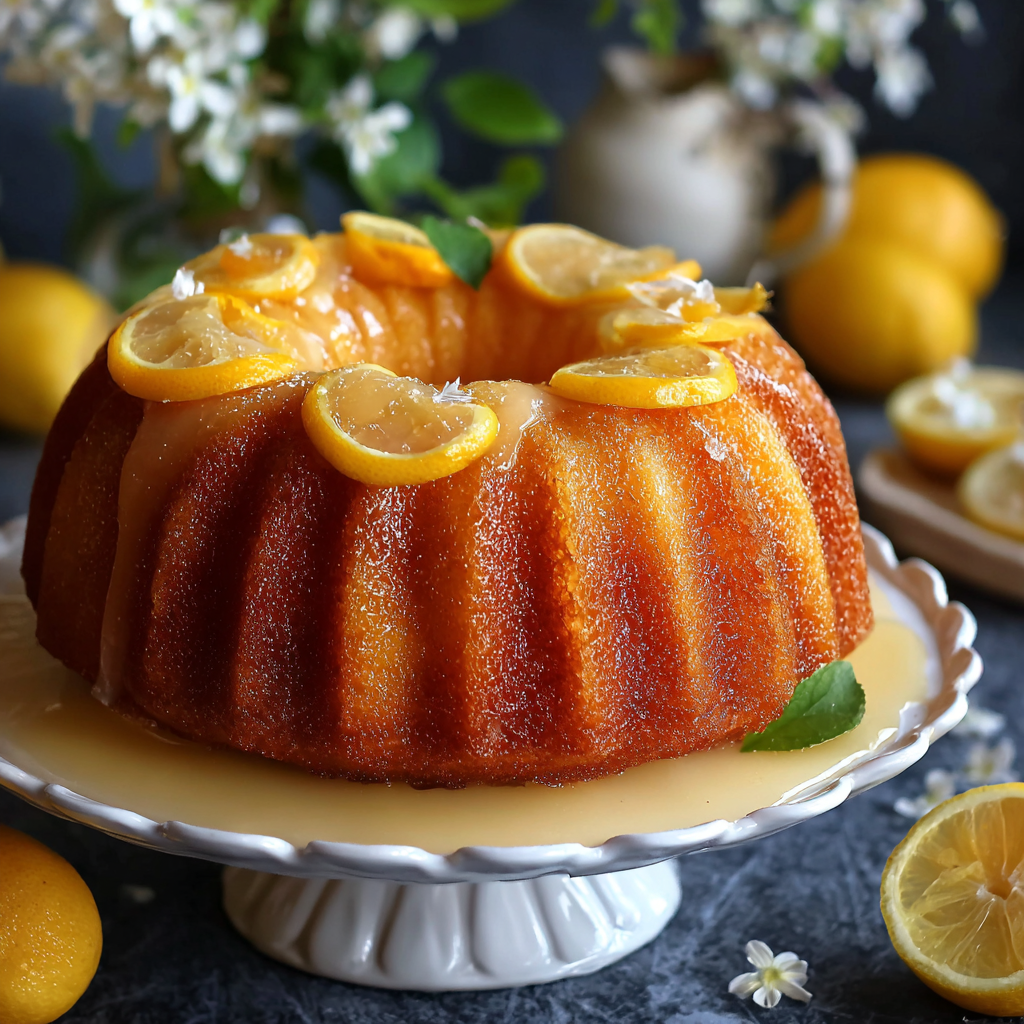
Let the cake cool in the pan for exactly 10 minutes, then invert onto a wire rack. While the cake is still hot, brush the Saturation Syrup over the entire surface. The heat will pull the syrup into the crumb. Once completely cool, pour the thick Cloud Glaze over the top.
Nutritional Information (Per Slice)
| Nutrient | Amount | Daily Value (%) |
| Calories | 385 kcal | 19% |
| Total Fat | 18g | 23% |
| Carbohydrates | 52g | 19% |
| Vitamin C | 12mg | 15% |
Common Mistakes to Avoid
- Using Bottled Juice: Bottled juice has a “cooked” flavor and lacks the bright acidity needed to cut through the butter.
- Inverting Too Soon: If you flip the cake immediately, it hasn’t structured yet and will break. If you wait too long, the cooling sugar will act like glue and stick to the pan. 10 minutes is the “golden window.”
- Skimping on Zest: Most recipes call for 1 tablespoon. For “Extreme” flavor, you need nearly half a cup. Use a microplane for the finest texture.
Conclusion
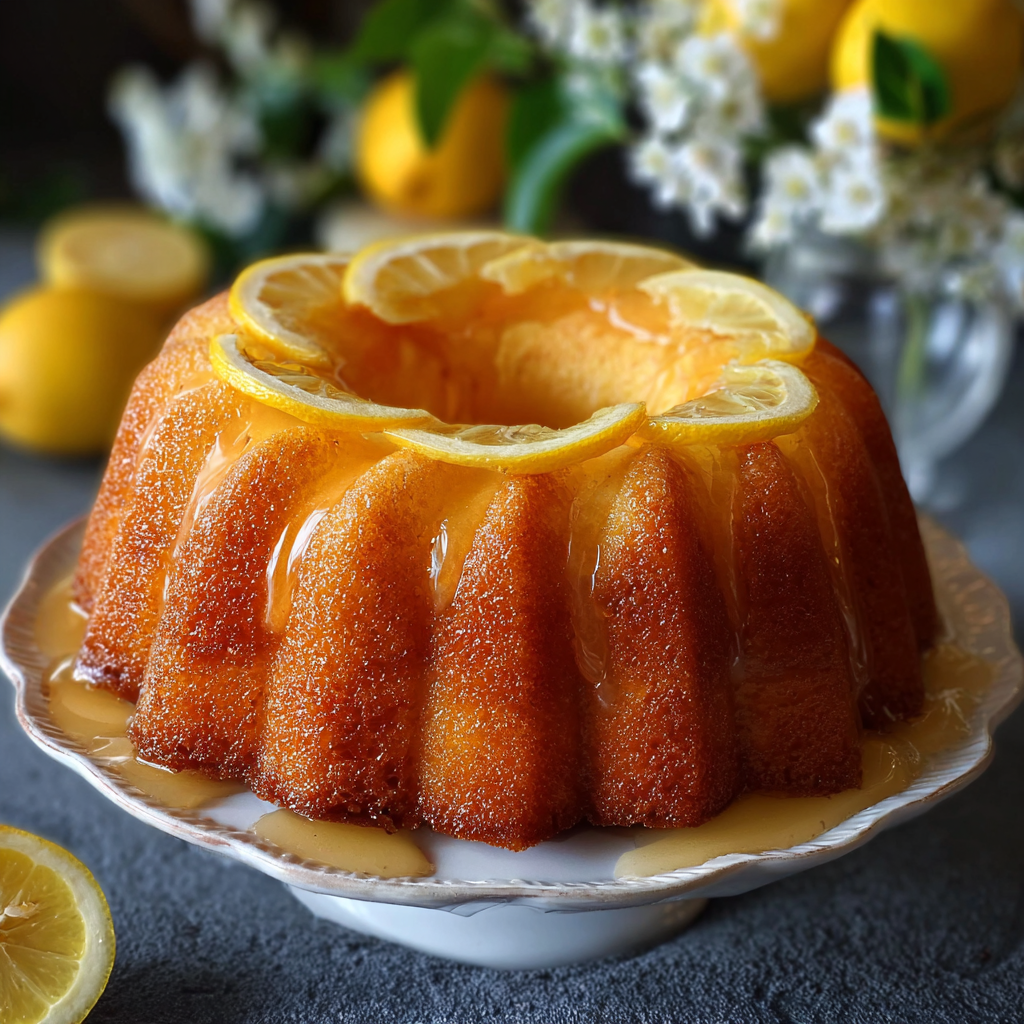
This Extreme Lemon Bundt Cake is a citrus lover’s dream. It isn’t just “lemon-scented”—it is a bold, tart, and buttery experience that commands attention.