Follow Me On Social Media!
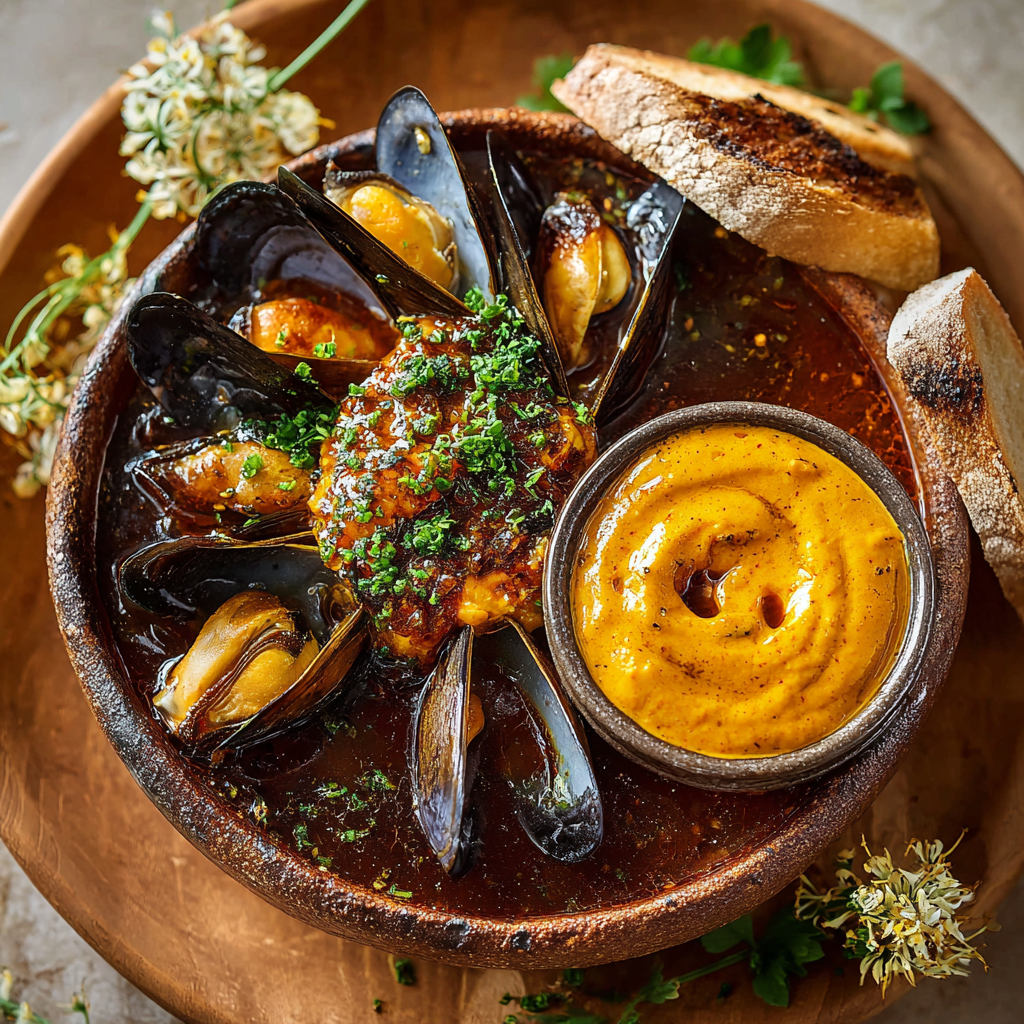
Traditional Seafood Marmite with Creamy Rouille Sauce

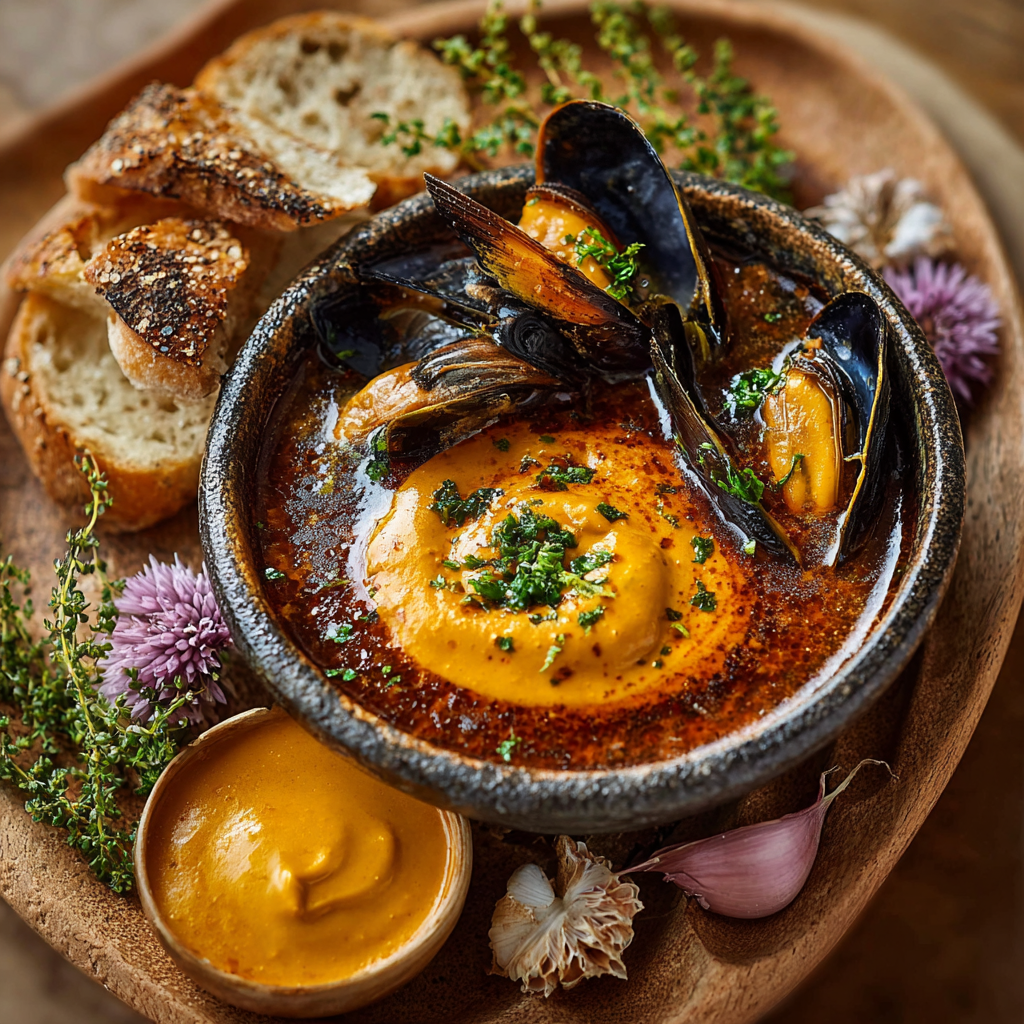
The Seafood Marmite (or Marmite de la Mer) is a coastal French classic that bridges the gap between a soup and a stew. Unlike a Bouillabaisse, which is often served in two courses, the Marmite is a unified, hearty dish featuring a variety of fish and shellfish poached in a rich, saffron-infused “court-mouillé” broth.
The Science of the “Sequential Poach”
The secret to a perfect Marmite is managing the protein coagulation temperatures. Different seafood reaches its ideal texture at different times:
- Firm Fish (Monkfish/Conger): Require longer to break down connective tissues.
- Shellfish (Mussels/Clams): Open quickly and become rubbery if over-boiled.
- Tender White Fish (Cod/Hake): Flake apart easily and should only be “kissed” by the heat at the very end.
By poaching in stages, you ensure every piece of seafood is succulent, not dry.
The Essential Ingredients
- The Seafood (approx. 1.2kg total):
- Firm: Monkfish or Gurnard (cut into chunks).
- Tender: Cod, Sea Bass, or Hake fillets.
- Shellfish: Large prawns (shell-on for flavor) and 500g fresh mussels.
- The Aromatics & Broth:
- 2 Fennel bulbs (sliced), 3 Potatoes (cubed), 2 Carrots, 1 Leek.
- 1g Saffron threads, 1 star anise, thyme, and bay leaf.
- 200ml Dry white wine & 1L high-quality fish stock.
- The Rouille Sauce:
- 1 Egg yolk, 2 cloves garlic (mashed), 1 tsp Dijon mustard.
- 150ml Extra virgin olive oil, pinch of saffron, and 1 tsp pimento or cayenne.
- The Secret: A small piece of boiled potato mashed into the sauce for a thick, traditional body.
Step-by-Step Instructions
1. The Creamy Rouille
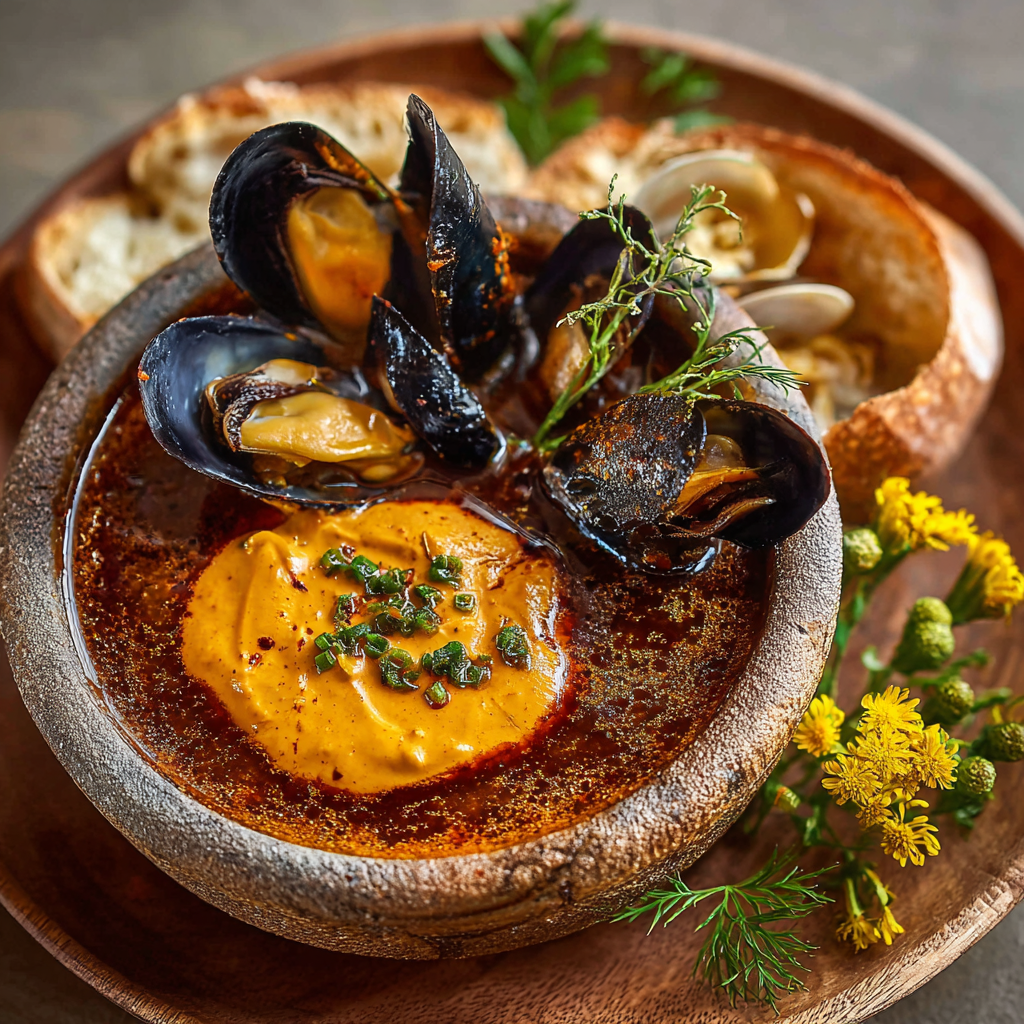
Start with the sauce so the saffron can infuse. In a mortar and pestle, crush the garlic and pimento with a bit of salt. Whisk in the egg yolk and mustard. Slowly drizzle in the olive oil while whisking constantly (as you would for mayonnaise) until thick. Fold in the mashed potato for that authentic, heavy texture. Set aside.
2. The Saffron Base
In a large heavy-bottomed pot (the “Marmite”), sauté the fennel, leeks, and carrots in olive oil until soft. Add the star anise and saffron. Pour in the white wine to deglaze, then add the fish stock and potatoes. Simmer for 15 minutes until potatoes are nearly tender.
3. The Seafood Sequence
- Stage 1: Add the monkfish or firm fish chunks. Simmer for 5 minutes.
- Stage 2: Add the prawns and the tender white fish fillets.
- Stage 3: Add the mussels. Cover the pot and cook for 3-4 minutes until the mussels have opened and the white fish is opaque.
4. The Assembly
Place a toasted piece of baguette spread generously with the Rouille at the bottom of each wide bowl. Ladle the fish, shellfish, and vegetables over the bread, then pour the golden broth over everything.
Timing: The “Freshness” Window
| Task | Duration | Context |
| Rouille Prep | 10 Minutes | Emulsifying the garlic and oil. |
| Broth Simmer | 20 Minutes | Building the vegetable and saffron base. |
| Sequential Poach | 10 Minutes | Ensuring each fish type is perfectly cooked. |
| Total Time | ~45 Minutes | Serve immediately for the best texture. |
Common Mistakes to Avoid
- Over-boiling the Broth: Once the fish is in, the broth should be at a gentle simmer (approx. $85^{\circ}\text{C}$). A rolling boil will break the delicate fish fillets into mush.
- Discarding Shells: If using whole prawns, leave the shells on during the poach. The shells contain glucosamine and minerals that significantly deepen the flavor of the broth.
- Cold Fish: Take your fish out of the fridge 15 minutes before cooking. If the fish is ice-cold, it will drop the temperature of the broth too quickly, leading to uneven cooking.
Conclusion
The Traditional Seafood Marmite is a masterclass in French coastal cooking. It is aromatic, visually stunning, and deeply satisfying, especially when the spicy, garlicky Rouille melts into the saffron broth.