Follow Me On Social Media!
Pineapple Rice: The “Sweet-Savory” Caramelization

The Science of the “Wok Char”
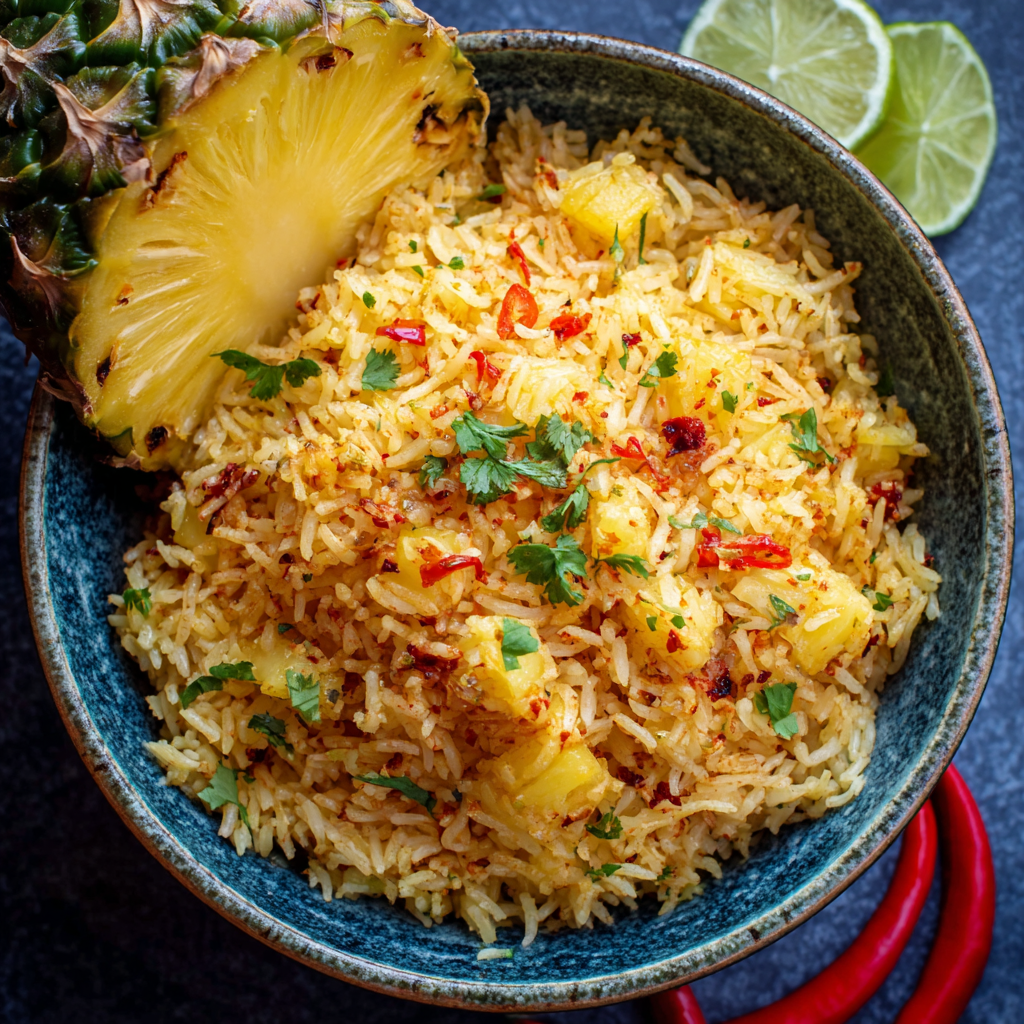
Pineapple rice (often known as Khao Pad Sapparod) is a masterpiece of hydrophilic balance. The primary challenge is the high water content of the pineapple, which can easily turn a stir-fry into a soggy mess.
- Maillard vs. Moisture: To get that signature smoky “Wok Hei” (breath of the wok), the rice must be dry. We use day-old chilled rice because the starch has undergone retrogradation, forming a firm exterior that can withstand high heat without clumping.
- Bromelain & Protein: Pineapple contains bromelain, an enzyme that tenderizes meat. If you are adding shrimp or chicken, the pineapple juices help keep the proteins succulent, while the sugars in the fruit caramelize against the hot surface of the pan, creating a deep amber glaze.
The Essential Ingredients List
Serves 2–3.
- The Grain Base:
- 3 cups Cooked Jasmine Rice: (Must be cold/day-old).
- The Tropical Core:
- 1 cup Fresh Pineapple: Diced into 1/2-inch chunks.
- 1/2 cup Cashews: Roasted (for essential crunch).
- 2 tbsp Raisins: (Optional, for concentrated sweetness).
- The Aromatics:
- 2 cloves Garlic: Minced.
- 1 Shallot: Finely diced.
- 1-2 Thai Bird’s Eye Chilies: (Adjust for heat).
- The Umami Sauce:
- 2 tbsp Fish Sauce (or Soy Sauce).
- 1 tsp Curry Powder: (Provides the golden color and earthy warmth).
- 1/2 tsp Sugar.
- The Finish:
- 2 Eggs: Lightly beaten.
- Fresh Cilantro & Green Onions.
Timing: The “High-Heat” Window
| Task | Duration | Context |
| Prep | 10 Minutes | Chopping fruit and aromatics. |
| Searing | 5 Minutes | Caramelizing pineapple and aromatics. |
| Stir-Frying | 5 Minutes | Integrating rice and sauce. |
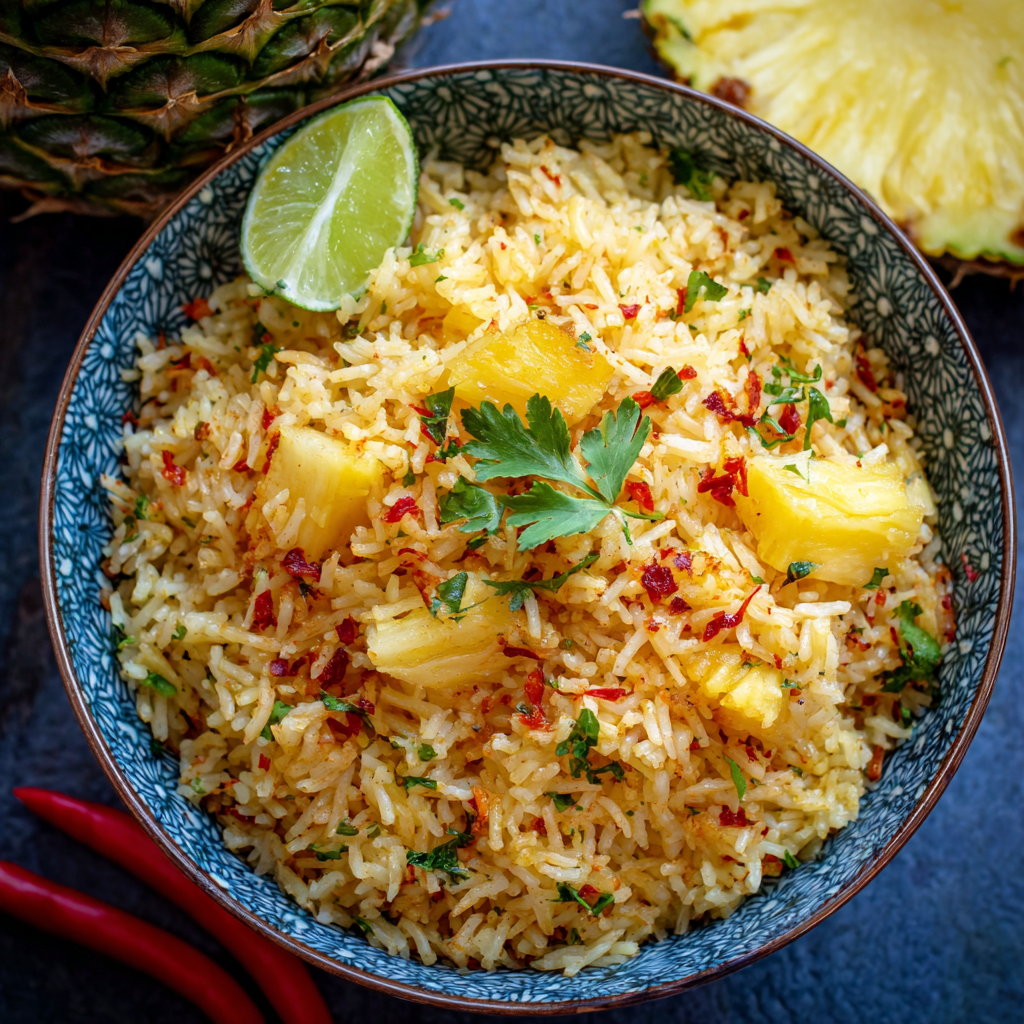
| Total Time | ~20 Minutes | Best served inside a hollowed-out pineapple! |
Step-by-Step Instructions
1. The Pineapple Sear
Heat 1 tbsp of oil in a wok or large skillet over high heat. Add the pineapple chunks. Let them sit undisturbed for 1 minute to develop a golden-brown char. Remove and set aside. Actionable Tip: Searing the fruit first locks in the juices so they don’t leak into the rice later.
2. The Aromatic Base
Add another tablespoon of oil. Sauté the shallots, garlic, and chilies for 30 seconds until fragrant. Push them to the side and pour in the beaten eggs. Scramble them quickly until just set.
3. The Rice Toss
Add the cold rice to the pan. Use your spatula to break up any clumps. Sprinkle the curry powder over the rice and toss vigorously. The rice should turn a beautiful uniform yellow.
4. The Final Emulsion
Add the fish sauce, sugar, roasted cashews, raisins, and the seared pineapple back into the pan. Stir-fry on high heat for 2-3 minutes. You want to hear the rice “crackle” in the pan—this means the moisture is evaporating and flavor is locking in.
Nutritional Information (Per Serving)
| Nutrient | Amount | Daily Value (%) |
| Calories | 420 kcal | 21% |
| Vitamin C | 45mg | 50% |
| Manganese | 1.2mg | 60% |
| Carbohydrates | 65g | 22% |
Common Mistakes to Avoid
- Using Freshly Cooked Rice: Fresh rice is full of steam. If you put it in a wok, it will turn into a sticky paste. If you must use fresh rice, spread it on a baking sheet and put it in the freezer for 15 minutes to dry it out.
- Using Canned Pineapple: Canned pineapple is often stored in heavy syrup, which is too sweet and too wet. Fresh pineapple has the structural integrity needed for stir-frying.
- Overcrowding: Stir-frying requires space for steam to escape. If you’re doubling the recipe, cook it in two batches to maintain that “fried” texture.
Conclusion
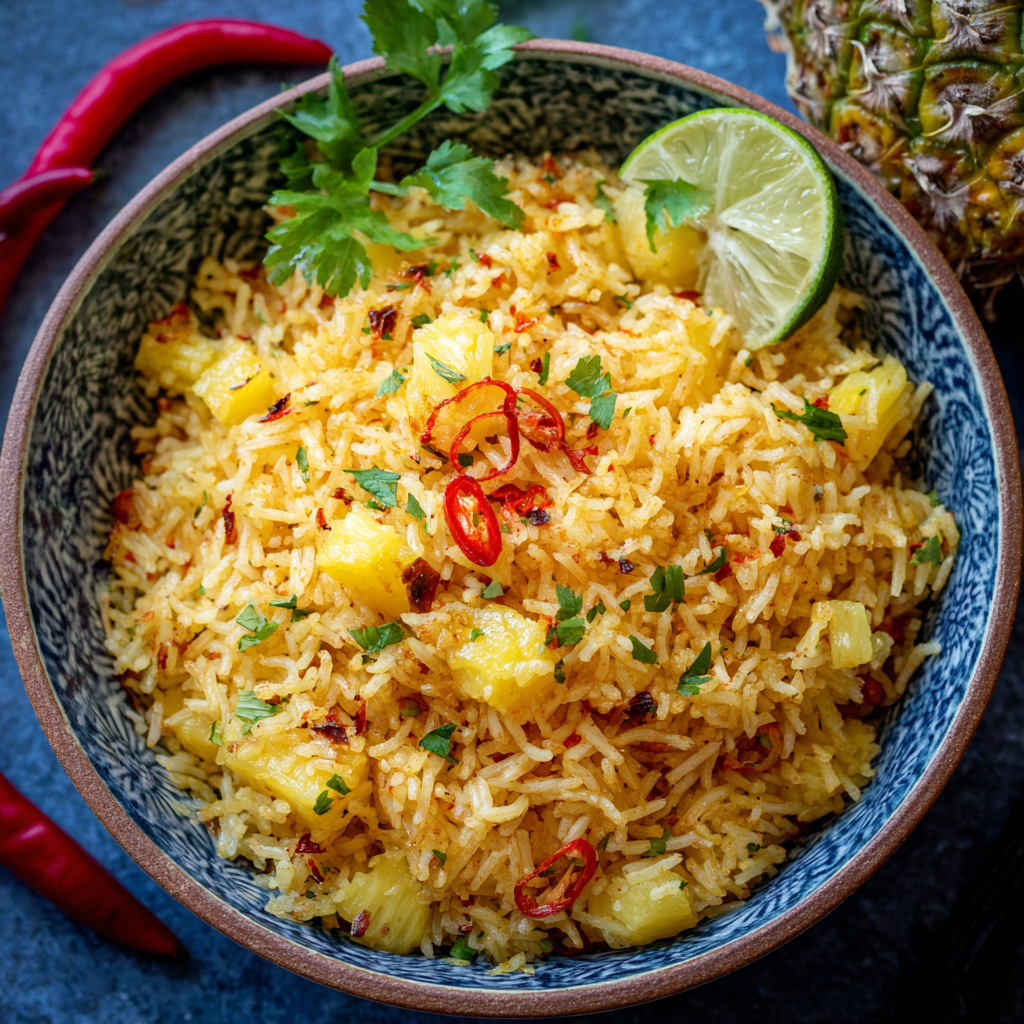
Pineapple Rice is a vibrant, multi-textured dish that hits every part of the palate: salty, sweet, spicy, and nutty. It’s an edible postcard from the tropics.